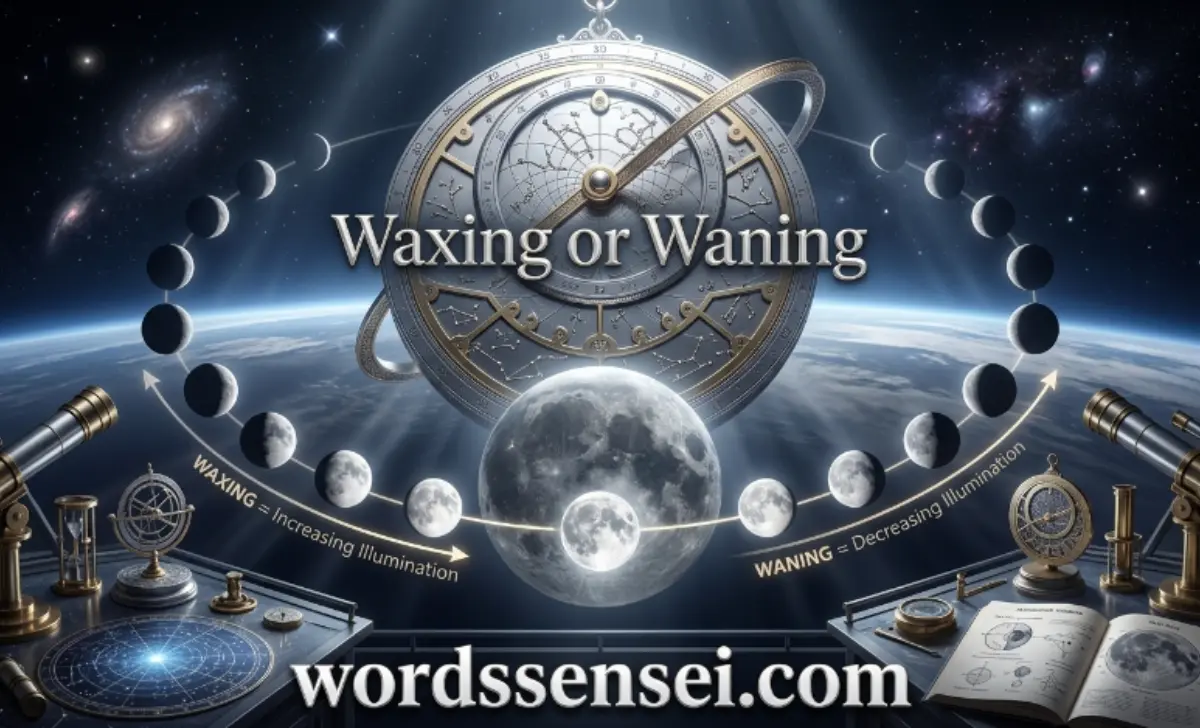
Waxing or waning can be confusing because both words describe change, but they move in opposite directions.
Waxing means something is increasing, growing, or becoming stronger. Waning means it is decreasing, fading, or becoming weaker.
You may see these words when reading about the moon, popularity, influence, power, energy, or public interest.
For example, the moon can be waxing as its visible light increases, while someone’s influence may be waning as it slowly declines.
Once you connect each word with its direction of change, the difference becomes much easier to remember.
Quick Answer
Waxing means increasing or growing, while waning means decreasing or becoming weaker.
| Word | Meaning | Simple idea |
|---|---|---|
| Waxing | Increasing, growing, becoming stronger | Going up |
| Waning | Decreasing, fading, becoming weaker | Going down |
Example:
The moon is waxing, so more of its illuminated side is becoming visible.
Interest in the product is waning, so fewer people are buying it.
A useful shortcut is:
Waxing = increasing
Waning = decreasing
What Does Waxing Mean?
Waxing means becoming larger, stronger, more intense, or more noticeable over time. It can describe physical growth as well as abstract changes such as popularity, influence, confidence, or interest.
The word comes from the verb wax, which has an older meaning of to grow or increase.
Examples of Waxing
- Her popularity is waxing.
- The team’s confidence is waxing after several wins.
- Public interest in the event is waxing.
- The moon is waxing this week.
- His influence is waxing within the organization.
In everyday English, phrases such as waxing and waning are often used together to describe something that repeatedly increases and decreases.
What Does Waning Mean?
Waning means becoming weaker, smaller, less powerful, or less intense.
The verb wane is commonly associated with a gradual decline. It can describe physical things, feelings, popularity, influence, energy, or interest.
Examples of Waning
- Her enthusiasm is waning.
- The politician’s influence is waning.
- Interest in the trend is waning.
- His energy began waning after several hours.
- The moon is waning, so its visible illuminated portion is decreasing.
Unlike a sudden drop, waning often suggests a gradual decrease.
Waxing vs. Waning in the Moon
The most familiar use of waxing and waning is in descriptions of the Moon’s phases.
During a waxing moon, the illuminated portion visible from Earth is increasing. During a waning moon, the visible illuminated portion is decreasing.
The lunar cycle includes several phases:
- New Moon
- Waxing Crescent
- First Quarter
- Waxing Gibbous
- Full Moon
- Waning Gibbous
- Third Quarter
- Waning Crescent
Waxing Moon
A waxing moon moves from the New Moon toward the Full Moon. More of the Moon’s illuminated side becomes visible each night.
For example:
The Moon is waxing, and the crescent is becoming larger.
Waning Moon
A waning moon moves from the Full Moon toward the New Moon. The visible illuminated portion gradually becomes smaller.
For example:
The Moon is waning, and the bright portion is getting smaller.
Importantly, waxing and waning describe the amount of the Moon’s illuminated portion visible from Earth, not the Moon physically becoming larger or smaller.
Waxing and Waning in Everyday English
You do not have to talk about astronomy to use these words.
Both terms can describe trends, feelings, popularity, influence, power, interest, and energy.
Waxing Examples
The band’s popularity is waxing among younger listeners.
Her confidence was waxing as the presentation continued.
Interest in electric vehicles has been waxing in many markets.
Waning Examples
Public interest in the story is waning.
His influence has been waning for several years.
Their enthusiasm began waning after the project was delayed.
These examples show why the words are useful when describing gradual changes.
Waxing vs. Waning: Easy Memory Trick
The easiest way to remember the difference is:
Waxing = growing
Waning = weakening
Think of a waxing moon: the visible light is growing.
Think of a waning moon: the visible light is fading.
Another simple pair is:
Wax → increase
Wane → decrease
You can remember the two as opposites:
Waxing goes up; waning goes down.
Waxing and Waning as Opposites
Although waxing and waning are not perfect opposites in every possible context, they commonly appear as a pair because they describe opposite directions of change.
| Situation | Waxing | Waning |
|---|---|---|
| Popularity | Increasing | Decreasing |
| Influence | Growing | Declining |
| Interest | Rising | Fading |
| Energy | Increasing | Decreasing |
| Moon’s visible illumination | Increasing | Decreasing |
| Power | Strengthening | Weakening |
This makes waxing and waning a useful phrase for describing something that moves through changing levels.
Waxing or Waning: Common Sentence Examples
Here are some natural examples to make the difference clear.
With Popularity
The singer’s popularity is waxing after the release of her new album.
The trend’s popularity is waning as newer styles appear.
With Interest
Consumer interest in the product is waxing.
Interest in the old model is waning.
With Influence
His political influence was waxing during the early years of his career.
Her influence began waning after she left the organization.
With Energy
My energy was waxing as I got closer to finishing the race.
His energy was waning after hours of work.
Waxing vs. Waning in a Sentence
The two words usually work naturally with nouns such as interest, popularity, influence, power, enthusiasm, confidence, energy, support, and intensity.
Waxing
Use waxing when the thing is becoming:
- More popular
- More powerful
- More intense
- More noticeable
- More widespread
- Stronger
Example:
The company’s influence is waxing in the technology sector.
Waning
Use waning when the thing is becoming:
- Less popular
- Less powerful
- Less intense
- Less noticeable
- Weaker
- Less influential
Example:
Support for the proposal is waning.
Is Waxing Always About Hair Removal?
No. This is an important point.
Many people first associate waxing with hair removal, such as waxing the legs, eyebrows, or face. That is a completely different use of the word waxing.
The verb wax has several meanings depending on context.
In waxing and waning, waxing means increasing or growing.
In waxing hair, it refers to removing hair with wax.
For example:
She booked a waxing appointment.
Here, the word has nothing to do with increasing.
But:
The Moon is waxing.
Here, it means the illuminated portion is increasing.
Context tells you which meaning is intended.
Waxing and Waning: Common Mistakes
Mistake 1: Treating them as synonyms
Incorrect idea: Waxing and waning both mean changing.
While both describe change, they describe opposite directions.
Waxing = increasing
Waning = decreasing
Mistake 2: Using waning for growth
The company’s popularity is waning after its successful launch.
If the popularity is increasing, waxing is the better word.
Mistake 3: Using waxing for decline
Interest in the product is waxing.
This means interest is increasing, not falling.
Mistake 4: Thinking a waning Moon is physically shrinking
A waning Moon is not actually becoming smaller. The visible illuminated portion is decreasing because of the Moon’s position in relation to Earth and the Sun.
Waxing and Waning vs. Increasing and Decreasing
Increasing and decreasing are much more common in everyday English.
Waxing and waning can sound more descriptive or literary, especially when discussing gradual trends.
Compare:
Interest in the subject is increasing.
Interest in the subject is waxing.
Both communicate growth, but the second has a more formal or expressive tone.
Likewise:
Public support is decreasing.
Public support is waning.
The word waning often suggests a gradual fading rather than an abrupt fall.
Waxing or Waning: Which Word Should You Use?
Choose waxing when something is growing, increasing, strengthening, or becoming more intense.
Choose waning when something is declining, fading, weakening, or becoming less intense.
A simple rule is enough:
Waxing = more
Waning = less
For the Moon:
Waxing Moon → visible light increases
Waning Moon → visible light decreases
For everyday trends:
Waxing popularity → popularity increases
Waning popularity → popularity decreases
Final Answer
Waxing and waning describe opposite directions of change.
Waxing means increasing, growing, or becoming stronger. Waning means decreasing, fading, or becoming weaker.
The words are especially common when describing the phases of the Moon, but they can also describe popularity, influence, interest, energy, confidence, and other gradual trends.
The easiest way to remember them is:
Waxing = increasing
Waning = decreasing
So, if something is becoming stronger, it is waxing. If it is gradually losing strength or intensity, it is waning.
FAQs
What is the difference between waxing and waning?
Waxing means increasing or growing, while waning means decreasing or becoming weaker.
Does waxing mean increasing?
Yes. In the phrase waxing and waning, waxing means becoming greater, stronger, or more intense.
Does waning mean decreasing?
Yes. Waning means gradually becoming weaker, smaller, less intense, or less popular.
What does a waxing Moon mean?
A waxing Moon means the portion of the Moon’s illuminated side visible from Earth is increasing.
What does a waning Moon mean?
A waning Moon means the visible illuminated portion of the Moon is decreasing as the lunar cycle moves toward the New Moon.
Are waxing and waning opposites?
They commonly function as opposites when describing an increase and decrease over time.
What is an easy way to remember waxing and waning?
Remember: waxing = growing and waning = weakening.
Read More Blogs:

Gerald Nelson is a contributing writer at Wordssensei.com, covering English grammar, vocabulary, and commonly confused words.