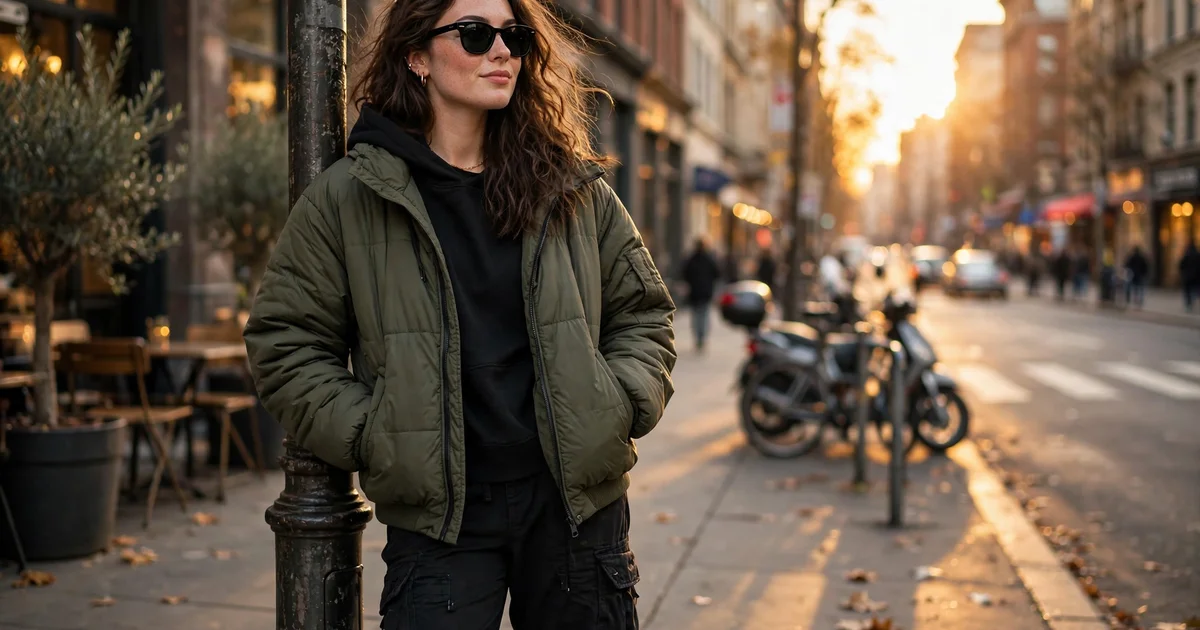
She walks into the frame like she owns the sidewalk: sharp winged eyeliner, glossy lips, hair laid perfectly, streetwear styled down to the sneakers — and the comments flood in with a single word: “baddie.” It is not an insult. It is not quite a compliment either, at least not in the old-fashioned sense. In internet slang, “baddie” names a whole archetype: the confident, stylish woman who commands every room and every feed she appears in.
Baddie: The Short Answer
Wiktionary defines “baddie” as “(neologism, slang) an attractive, confident woman, especially one who is a social media influencer.” In everyday use, a baddie is a woman whose confidence and style are the point — she dresses with intention, carries herself with self-assurance, and curates a polished image, especially online. The word is reclaimed and positive in this sense: calling someone a baddie is praise for their confidence, not a criticism of their character.
What Does “Baddie” Mean in Internet Culture?
The baddie is one of the defining archetypes of the Instagram era. The word describes a look and an attitude together: bold makeup (sharp liner, full lashes, glossy or lined lips), styled hair, fashionable streetwear or going-out outfits, long nails, and — most importantly — the confidence to wear all of it like armor. But the aesthetic is only half the definition. Plenty of people dress well; a baddie carries herself with a particular self-possessed energy, unbothered and in control. The captions write themselves: unbothered, booked, busy, thriving.
The “especially a social media influencer” part of the dictionary definition matters because the baddie was born on social media. The archetype grew through Instagram feeds and TikTok “get ready with me” videos, where the full transformation — the makeup routine, the outfit check, the final mirror pose — became a content genre of its own. Calling someone a baddie usually means she has mastered that visual language: she knows her angles, her style is consistent, and her confidence reads through the screen.
The Old Meaning: Don’t Confuse Them
Here is the trap learners must avoid. “Baddie” is an old word with an old meaning: a baddie was a troublemaker, a villain, the bad guy — “the baddies” in a story are the antagonists. That sense still exists in general English. The internet slang sense is a reclamation: it took the “bad” in “baddie” and flipped it into praise, the way slang often turns a negative into a compliment (compare “bad” meaning good, or “sick” meaning excellent).
Context makes the meaning clear. “The baddies in the movie” means the villains — old sense. “She’s such a baddie” means she is confident and stylish — new sense. If you hear “baddie” with admiration in the voice and confidence in the description, it is the slang sense. Learners who only know the villain meaning will misread compliments as insults, so keeping both senses in mind is essential.
How to Use It
- “She walked in looking like a full baddie — the fit, the hair, everything.”
- “Baddie era: new hair, new wardrobe, new attitude.”
- “Her Instagram is pure baddie aesthetic.”
- “Channel your inner baddie and wear the outfit.”
Notice the common patterns: “baddie era” (a phase of confident reinvention, closely related to the glow-up — a baddie era is often the result of a glow-up), “baddie aesthetic” (the visual style as a named look), and “inner baddie” (the confidence as something you can summon). The word also appears in the same confident register as bussin — “the fit is bussin, full baddie energy” is a natural 2026 sentence. And where the baddie owns the room, the brat archetype plays a nearby but distinct role in internet culture — both celebrate confidence, but brat energy is messier and more rebellious where baddie energy is polished and in control.
Usage Notes: Respect the Reclamation
Because the slang sense is reclaimed-positive, tone matters. Used admiringly — by friends, by fans in comments, by women about themselves — “baddie” is praise. Used sarcastically or as a label for a stranger, it can still sting, because you are commenting on someone’s appearance without invitation. The safest uses are self-description (“my baddie era”), compliments to people you know, and admiring comments on public posts where the aesthetic is clearly being showcased.
Also note the gendering: the dictionary definition specifies a woman, and that is how the word is overwhelmingly used. Applying it to men is rare and usually joking. And keep the register in mind — it is informal internet slang, at home in captions, comments, and conversation with friends, not in formal writing.
Common Mistakes to Avoid
First, do not use the villain sense when the slang sense is meant — “she’s a baddie” is almost never calling her evil. Second, do not reduce it to looks alone: confidence is half the definition, and calling someone a baddie purely for their face misses the attitude the word celebrates. Third, do not use it as a generic synonym for “pretty” — a baddie is specifically stylish, self-assured, and image-conscious, not just attractive. Getting the archetype right is what separates someone who knows the slang from someone just guessing.
Frequently Asked Questions
A baddie is an attractive, confident woman, especially a social media influencer — Wiktionary’s definition of the slang sense. It names an archetype: bold style, polished image, and self-assured attitude. In current usage it is reclaimed and positive — praise for confidence, not an insult.
In the internet slang sense, it is a compliment — it praises a woman’s confidence and style. But the word also has an older meaning (a villain or troublemaker), and tone matters: said admiringly about someone’s look, it is praise; said sarcastically about a stranger, it can sting.
The old meaning is “villain” or “troublemaker” — the baddies in a story are the antagonists. The new slang meaning is the confident, stylish archetype. Context distinguishes them: “the baddies in the movie” is the old sense; “she’s such a baddie” is the new one.
The baddie aesthetic is the visual style of the archetype: bold makeup (winged liner, glossy lips), styled hair, fashionable streetwear, long nails — worn with visible confidence. It grew through Instagram and TikTok, where transformation and outfit content made the look a named, recognizable style.
A “baddie era” is a phase of confident reinvention — new hair, new wardrobe, new attitude. It is closely related to a glow-up: a baddie era is often what a glow-up looks like once it is complete, when the confidence becomes the whole personality.
Rarely. The dictionary definition specifies a woman, and that is how the word is overwhelmingly used. Applied to men it is usually joking. The archetype — the aesthetic, the confidence, the social-media polish — is culturally coded as feminine in current usage.