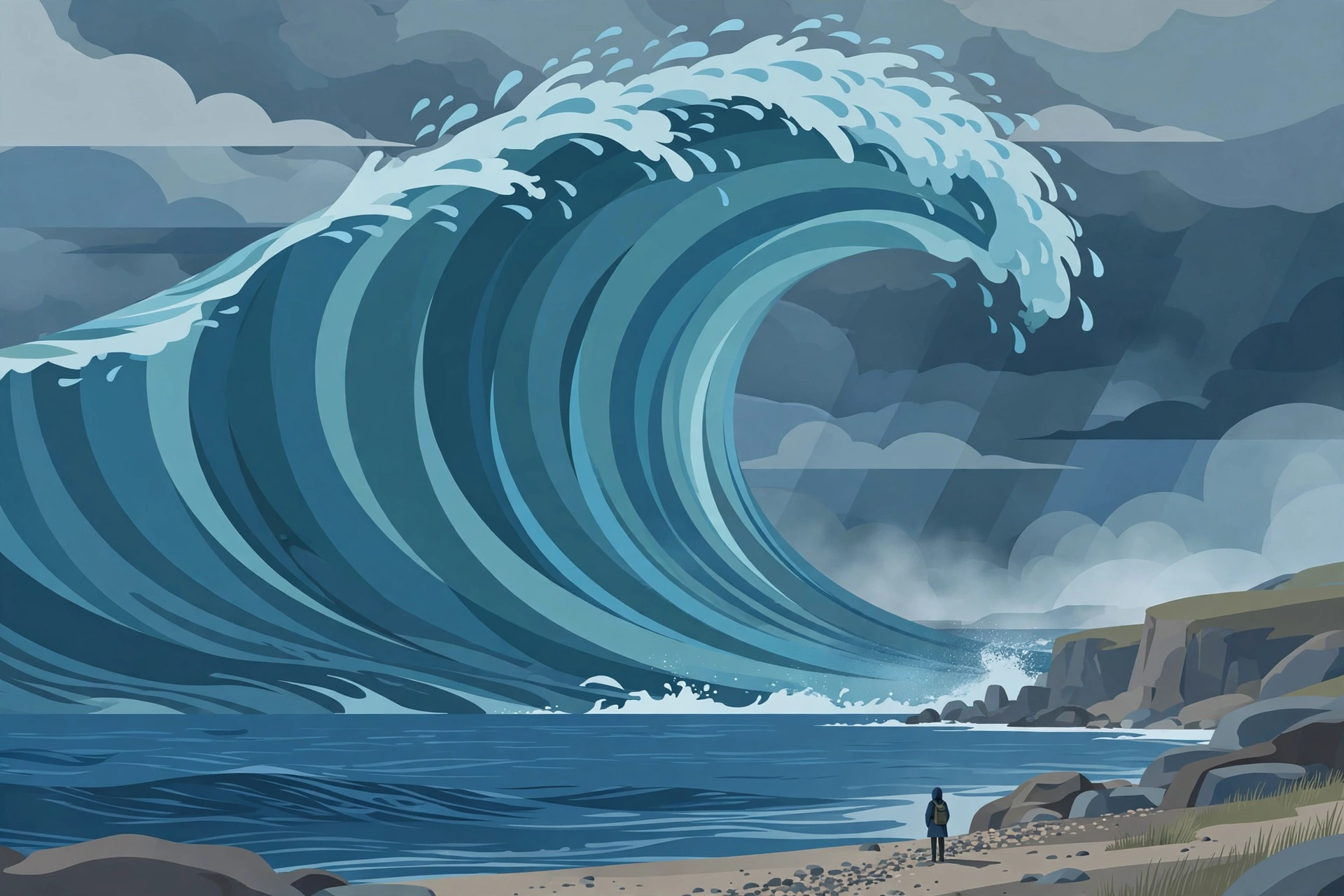
“The enormity of the mountain took our breath away.” Perfectly natural sentence — and yet, somewhere out there, a purist is wincing. They’ll tell you enormity means monstrous wickedness, not bigness, and that you should have written enormousness. Are they right? The dictionary has a more interesting answer than either side expects.
Enormity: The Short Answer
Enormity has four legitimate meanings, including both wickedness AND size. Merriam-Webster defines enormity as: 1. “an outrageous, improper, vicious, or immoral act”; 2. “the quality or state of being immoderate, monstrous, or outrageous; especially: great wickedness”; 3. “the quality or state of being huge: immensity”; 4. “a quality of momentous importance or impact.” So the size sense is real dictionary English. The usage note adds the honest nuance: the word “usually suggests something so large as to seem overwhelming.” Use it for bigness that awes or appalls — and know the wickedness sense still lives in the word.
The Original Sense: Wickedness
This is where the purists get their ammunition, and they’re not wrong about the history. Enormity comes from the Latin enormis — e- (“out of”) + norma (“rule” or “pattern”). Something enormous was, literally, out of the normal pattern: abnormal, monstrous. The earliest English uses leaned into moral monstrousness — enormity meant outrageous evil, acts so bad they broke the pattern of decent behavior.
That sense is still alive in formal writing:
- “The enormity of the crime shocked the nation.” (outrageous wickedness)
- “She documented the enormities of the regime.” (atrocious acts)
- “The report failed to convey the enormity of the suffering.” (overwhelming, terrible scale)
In these sentences the word carries weight that “bigness” alone couldn’t deliver — and that’s the Latin root still doing its work.
When “Enormity” Means Size
Here’s the part the purists skip: the size sense is not a modern corruption. Merriam-Webster’s usage note acknowledges that “some insist ‘enormousness’ is the proper word for size,” but observes that “enormity frequently refers to large size… though it usually suggests something so large as to seem overwhelming.”
That last clause is the key. When writers reach for enormity instead of enormousness, they’re usually reaching for more than volume — they’re reaching for awe, dread, or impact:
- “The enormity of the Pacific became clear as we lost sight of land.” (overwhelming scale)
- “He stared at the enormity of the task ahead.” (momentous impact)
- “The enormity of the data breach kept growing.” (huge and alarming)
The mountain sentence at the top of this article? Fine. Mountains are legitimately overwhelming.
Enormity vs. Enormousness
If both words exist, which should you use? Think of enormousness as the plain, neutral word for “great size” — it carries no judgment, no awe, no shadow of wickedness. Enormity is the loaded one: it colors the size with something overwhelming, momentous, or terrible.
- “The enormousness of the warehouse” — just a big building.
- “The enormity of the warehouse” — a big building that impresses or unsettles you.
In careful writing, that’s the real distinction. Reach for enormousness when size alone is the point; reach for enormity when the size overwhelms. And if you mean moral horror, enormity is doing exactly what its Latin root intended. Like irregardless, this word’s controversy is really about which sense of the word you trust.
Common Mistakes With Enormity
Three habits to watch:
- Using it as a flat synonym for “bigness.” “The enormity of the sandwich” is comic, not correct usage — the word demands scale that overwhelms. If nothing about the size awes or appalls, choose enormousness or a simpler word.
- Declaring the size sense wrong. The purist correction (“enormity means wickedness, not size”) is the mistake now — the dictionary lists the size sense plainly. Correcting a correct usage is worse than the usage.
- Forgetting the wickedness sense exists. In historical or legal writing, enormity often means atrocity. If you’re reading about “the enormities of the war,” don’t picture large buildings — picture crimes.
Using “Enormity” in Sentences
- “The enormity of the ocean liner made the dock look like a toy.” (immensity)
- “Historians still debate the full enormity of the atrocity.” (great wickedness)
- “They underestimated the enormity of the challenge.” (momentous importance)
- “The enormities committed during the war were finally documented.” (outrageous acts)
- “Standing in the desert at night, you feel the enormity of the sky.” (overwhelming scale)
Notice how each example leans on one of the four dictionary senses — and how the word always carries a little more than plain size.
Frequently Asked Questions
Merriam-Webster gives four senses: an outrageous or immoral act; great wickedness; hugeness or immensity; and momentous importance or impact. The word’s Latin root (enormis, “out of the normal pattern”) connects all four — something so far outside the pattern it overwhelms.
No. Some usage commentators insist enormousness is the only proper word for size, but Merriam-Webster explicitly lists “the quality or state of being huge: immensity” as a definition and notes that the size sense is frequent. The honest nuance: the size sense usually implies something overwhelming, not just big.
Enormousness is the neutral word for great size. Enormity is the loaded word — it colors the size with awe, dread, or momentous impact, and it can also mean moral wickedness. If you only mean “big,” enormousness is the safer, cleaner choice; if you want the weight, use enormity.
From Latin enormis — e- (“out of”) plus norma (“rule” or “pattern”). Something enormous was originally out of the normal pattern: abnormal, monstrous. That origin explains why the wickedness sense (monstrous acts) and the size sense (monstrous scale) both grew from the same root.
Usually not without some tension. Because the word carries the echo of its wickedness sense and its “overwhelming” usage note, enormity fits scale that awes, alarms, or impresses — “the enormity of the achievement” works if the achievement overwhelms, but a plain compliment would do better with enormousness. It’s the same class of usage question as <a href=”https://wordssensei.com/begs-the-question-meaning/”>begging the question</a> — the contested sense is the most powerful one.
Yes — it’s more formal and more literary than “hugeness” or “bigness,” and it tends to appear in serious writing: journalism, history, literature. Its formality is part of why the wickedness sense survives: formal registers preserve older meanings.