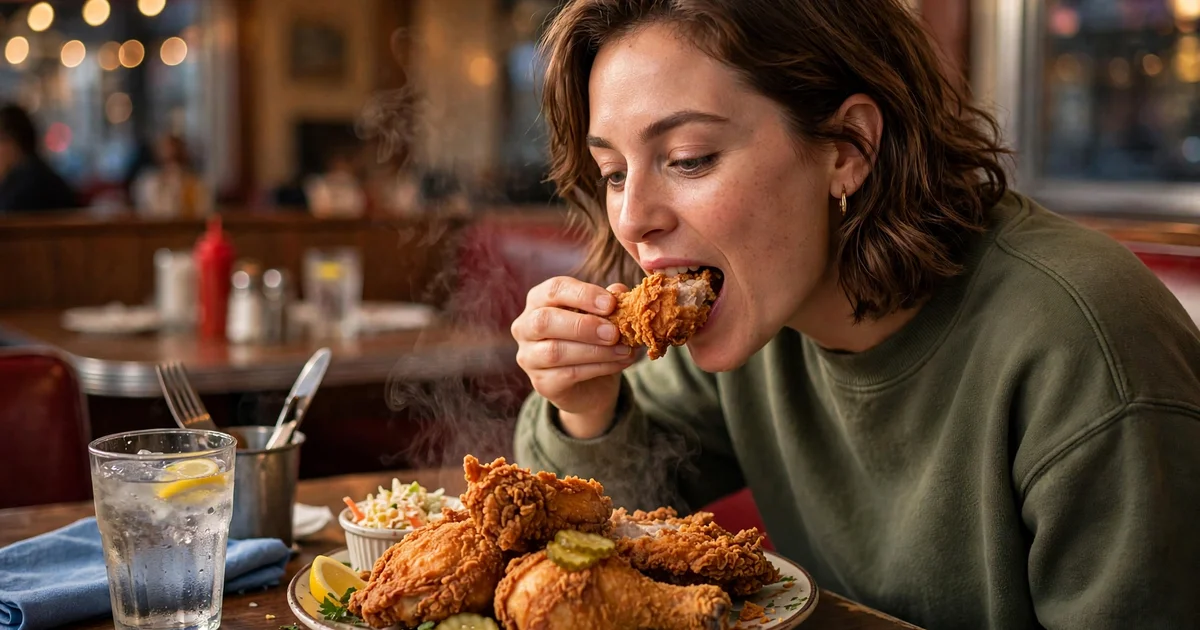
The plate lands on the table, steam still rising, and before the first bite is even finished, someone at the table says it: “This is bussin.” Nobody asks what it means. The tone says everything — eyes closed, head nodding, already reaching for a second helping. In internet slang, “bussin” is the word for food so good it demands an announcement, and it has since stretched far beyond the dinner table.
Bussin: The Short Answer
Dictionary.com defines “bussin” as “adjective, Slang. 1. great; wonderful; amazing.” In practice, it means something is outstanding — excellent to the point of excitement. It started as a word for amazing food (“this pasta is bussin”) and is now used for anything impressive: a song, an outfit, a party, a play in a game. If it is bussin, it is top-tier.
What Does “Bussin” Mean?
At its core, “bussin” is enthusiastic approval. It is stronger than “good” and warmer than “impressive” — it carries the energy of someone who cannot contain their reaction. When a teenager says a track is bussin, they are not offering a measured review; they are telling you it slaps, it hits, it deserves your attention right now. The word does emotional work that “great” cannot: it performs excitement.
The most important thing to know is that this is a food-first term. The classic, original context is eating: “bussin” describes food that tastes incredible. “This biryani is bussin” is the textbook sentence. From food, the meaning widened by analogy — if amazing food is bussin, then an amazing song, an amazing fit, or an amazing night out can be bussin too. But food remains the word’s home territory, and using it about a meal is never wrong.
Spelling: Bussin vs Bussin’
You will see it written both ways: “bussin” and “bussin’.” The apostrophe version reflects the pronunciation — the word is spoken like “bussin’,” with the final g dropped, in the style of many English slang adjectives. Both spellings are widely used online, and they mean exactly the same thing. For learners, “bussin” (no apostrophe) is the safer written form; it is the spelling dictionaries and explainers use most often, and it will not look like a typo to any reader.
How to Use It in Real Sentences
- “This pizza is bussin, I’m ordering it again tomorrow.”
- “Her new single? Absolutely bussin.”
- “The whole fit is bussin — where did you get those shoes?”
- “Last night’s match was bussin, that final goal was unreal.”
- “My mom’s cooking is always bussin, no contest.”
Notice the grammar: it works as a predicate adjective (“this is bussin”), and it intensifies naturally with words like “absolutely,” “lowkey,” or “fr” (for real). It pairs with the same enthusiastic register as no cap — “no cap, this is bussin” is a completely natural sentence in this slang world. And when something is the opposite of bussin, speakers reach for the mirror term: delulu describes a different kind of internet energy entirely, but both words live in the same 2026 vocabulary of strong reactions.
The Word’s Journey: From 2020 Peak to 2026
“Bussin” is not brand new. It peaked around 2020–2021, when food-review videos and TikTok made “bussin” the default caption for anything delicious on camera. Like many slang terms, it then settled into the background — still used, no longer the word of the moment. What makes it worth learning in 2026 is the resurgence: fresh explainers from slang guides in September and October 2026 show the word is actively back in circulation, taught to a new wave of learners alongside newer terms. Slang often works in cycles, and “bussin” is currently riding its second wave — familiar enough to be understood everywhere, current enough to appear in this year’s guides.
Common Mistakes to Avoid
First, keep it enthusiastic: “bussin” is not a mild compliment. Calling a decent-but-unremarkable sandwich “bussin” oversells it and marks you as someone who does not quite get the word’s intensity. Second, mind the register — it is informal slang, perfect for friends, captions, and comments, but wrong for a job interview or a formal review. Third, do not force it onto formal nouns: “bussin” describes experiences and things you react to (food, music, outfits, events), not abstractions like “your quarterly report.” Finally, remember the food roots: when in doubt, use it about food first. That is the context where it can never sound off, and it connects naturally to its sibling phrase from the same slang family, rent free — as in, “this biryani is bussin and now it’s living rent-free in my head.”
Frequently Asked Questions
“Bussin” means great, wonderful, or amazing. Dictionary.com defines it as “adjective, Slang. 1. great; wonderful; amazing.” It is enthusiastic approval — stronger than “good” — and it started as a word for delicious food before widening to anything impressive.
It started with food — “this pasta is bussin” is the classic use — but it has widened to anything outstanding: songs, outfits, parties, games. Food remains its home territory and the safest context, but using it for other impressive things is completely standard now.
Both are used and mean the same thing. “Bussin'” (with the apostrophe) reflects the dropped-g pronunciation; “bussin” is the cleaner written form and the one dictionaries use most. For writing, stick with “bussin.”
Yes. It peaked around 2020–2021, settled for a while, and is currently resurgent — fresh slang explainers from September and October 2026 treat it as active vocabulary. It is familiar enough to be understood everywhere and current enough to keep learning.
No. It is informal internet slang, suited to friends, captions, and comments. Do not use it in job interviews, formal essays, or professional reviews — its whole power comes from its casual, enthusiastic register.
There is no single official antonym, but speakers in the same slang world reach for words like “mid” (mediocre) or simply “trash” for the negative end. “Bussin” sits at the top of the scale; anything merely okay does not qualify.