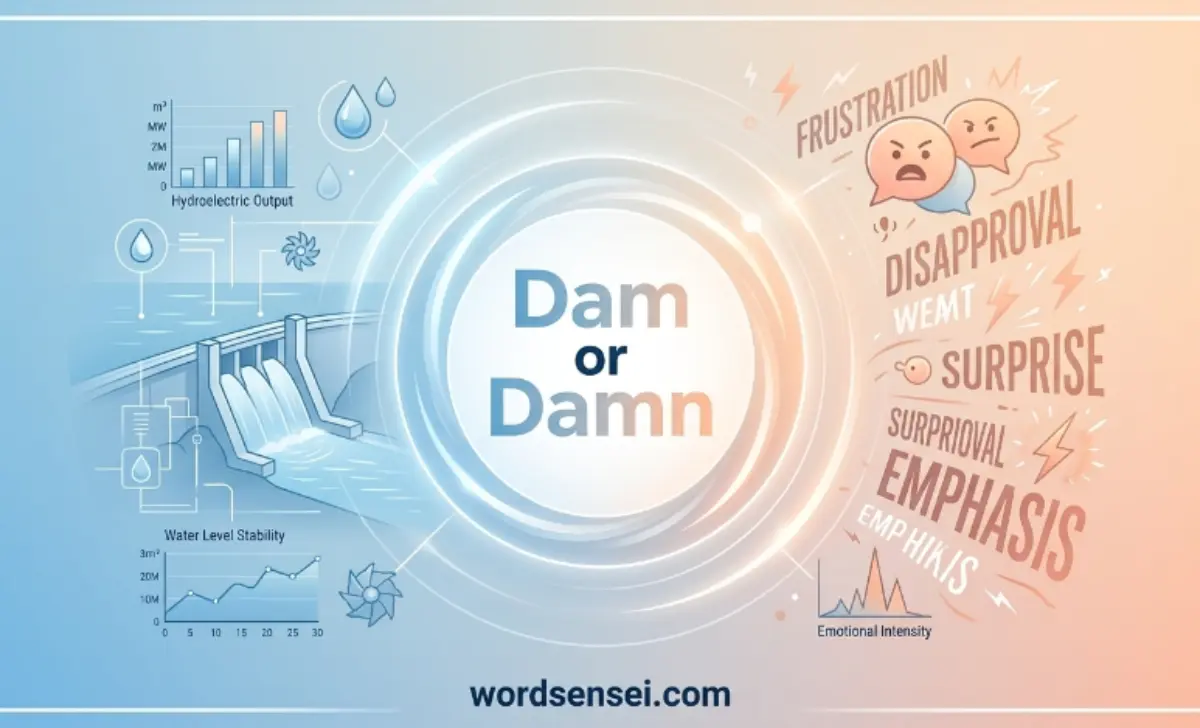
Many English learners get confused between “dam” and “damn” because both words sound almost the same when spoken. This small difference often leads to mistakes in writing, texting, and even exams.
However, both words have completely different meanings and uses in English grammar. One refers to water structures, while the other is an emotional expression or mild swear word.
In this guide, you will clearly understand dam or damn, their meanings, correct usage, grammar rules, examples, and common mistakes so you never confuse them again in real life.
Quick Answer
The correct word depends on meaning:
- Dam = a structure built to hold back water
- Damn = an expression used to show anger, frustration, or emphasis
So, both words are correct, but they are used in different contexts.
A dam is used in engineering and geography, while damn is used in informal speech and writing.
Correct Example
- The dam stopped the river water.
- Damn! I forgot my keys.
Incorrect Example
- The damn broke after heavy rain. ❌ (wrong meaning)
- He said dam when he was angry. ❌ (wrong spelling for expression)
What Does Dam or Damn Mean?
Common Meanings
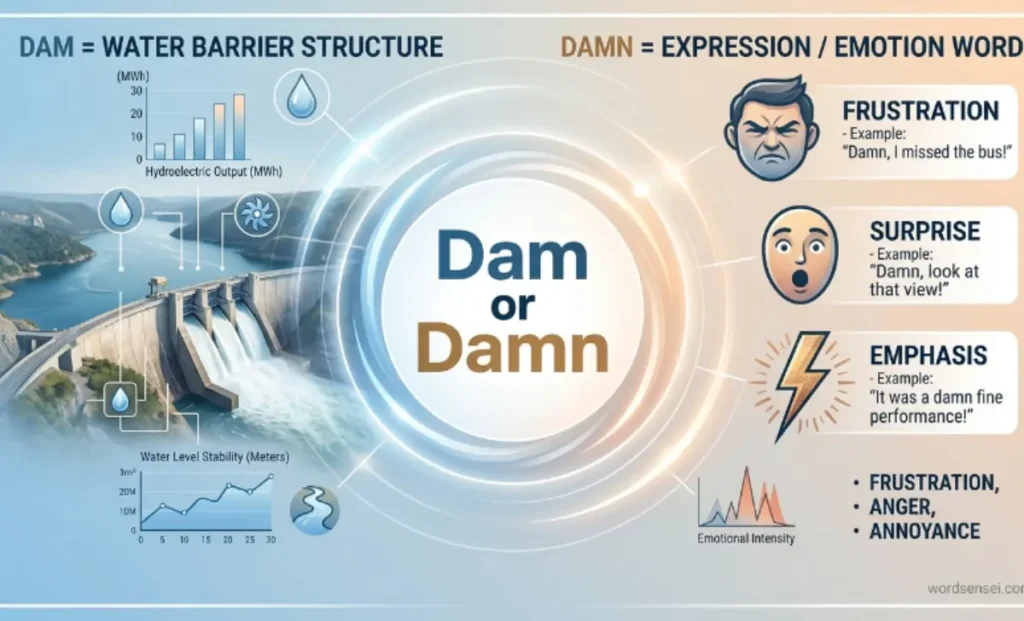
Dam Meaning
A dam is a large wall or barrier built across a river to control water flow, store water, or generate electricity.
Key uses:
- Water storage
- Flood control
- Hydroelectric power generation
Examples of famous dams:
- Hoover Dam (USA)
- Three Gorges Dam (China)
Damn Meaning
“Damn” is an emotional word used to show:
- Anger
- Surprise
- Frustration
- Strong emphasis
It is also used as a mild swear word in informal English.
Simple Usage Examples
- The dam provides electricity to the city.
- Damn, that was a close call!
- The dam is full after heavy rain.
- I missed the bus, damn it!
The Origin of Dam or Damn
Word History
Dam
The word “dam” comes from Middle Dutch and Old Norse roots, where it referred to barriers used to control water flow. Over time, it became an important engineering term in English.
Damn
The word “damn” comes from Latin “damnare,” meaning “to condemn or punish.” It entered English through Old French and later became a common emotional expression.
Why the Confusion Happens
People confuse dam and damn because:
- They sound very similar in speech
- Typing quickly leads to spelling errors
- Auto-correct sometimes changes words incorrectly
- Learners are unfamiliar with emotional vs technical vocabulary
British English vs American English
There is no difference between British and American English for these words. Both use:
- Dam = water structure
- Damn = emotional expression
Comparison Table
| Word | Meaning | British English | American English |
|---|---|---|---|
| Dam | Water barrier | Correct | Correct |
| Damn | Expression/swear | Correct | Correct |
| Dam as swear | Incorrect | Incorrect | Incorrect |
| Damn as structure | Incorrect | Incorrect | Incorrect |
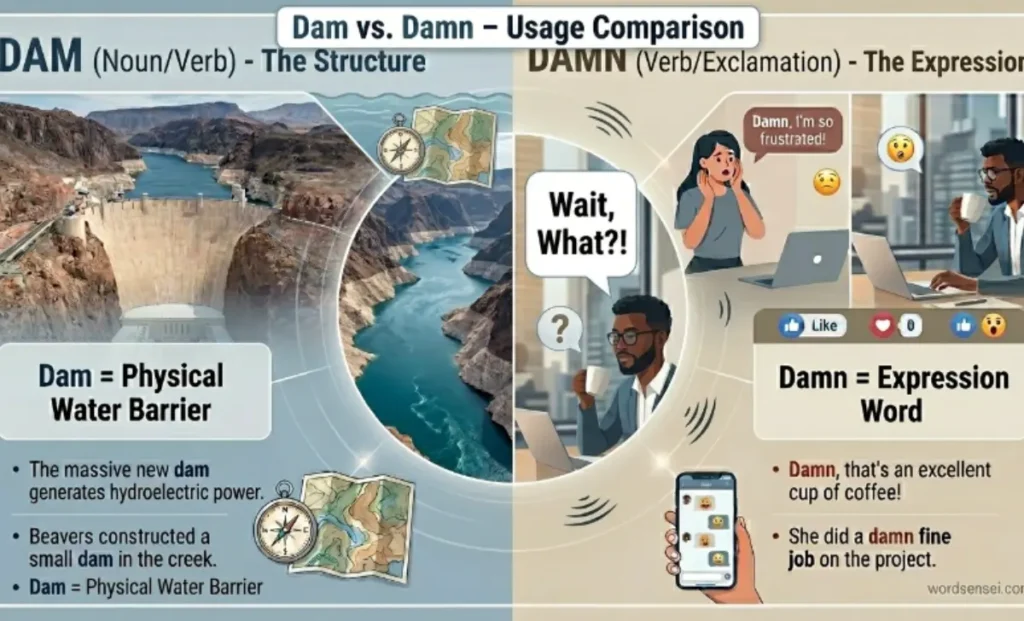
Dam vs Damn – Usage Comparison
Spelling Comparison Table
| Word | Correct Usage | Incorrect Usage | Region |
|---|---|---|---|
| dam | engineering, water control | emotional expression ❌ | global |
| damn | emotions, slang, emphasis | water structure ❌ | global |
Which Spelling Should You Use?
US Audience
Use:
- Dam for engineering and geography
- Damn for informal speech
UK Audience
Same rules apply as US English.
International Writing
Use dam in formal writing and damn only in informal contexts.
Academic Writing
- Use “dam” only
- Avoid “damn” unless quoting speech
Social Media Usage
“Damn” is common in casual posts and reactions.
Common Mistakes with Dam or Damn
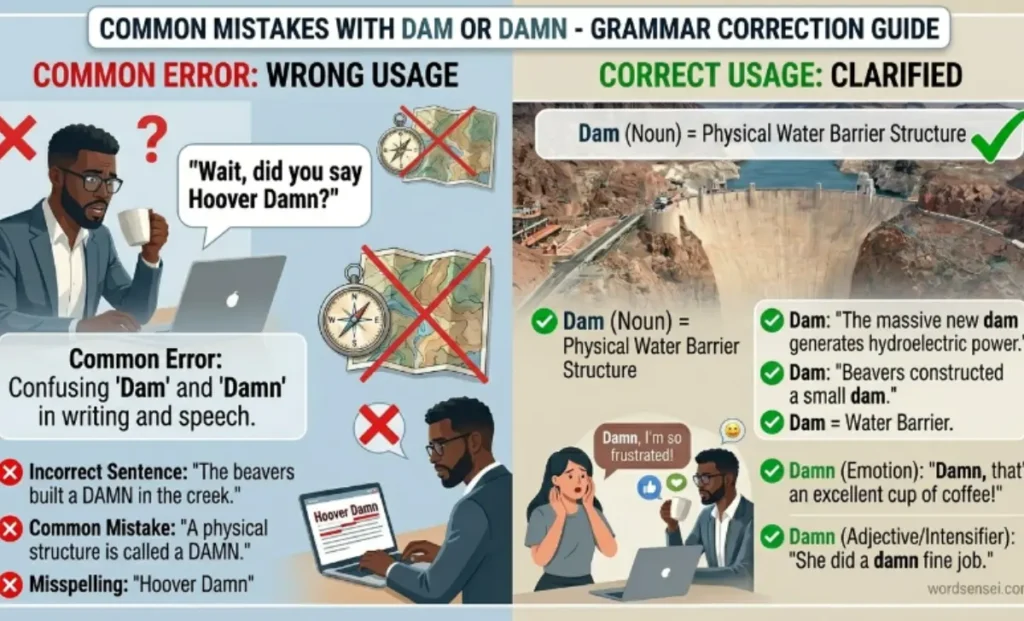
Frequent Errors
- Using “damn” instead of “dam” in science writing
- Confusing emotional and technical meaning
- Misspelling in fast typing
- Using both words interchangeably
Corrected Examples
| Incorrect | Correct |
|---|---|
| The damn broke. ❌ | The dam broke. ✔ |
| The dam! I’m angry. ❌ | Damn! I’m angry. ✔ |
| A huge damn was built. ❌ | A huge dam was built. ✔ |
Dam or Damn in Everyday Examples
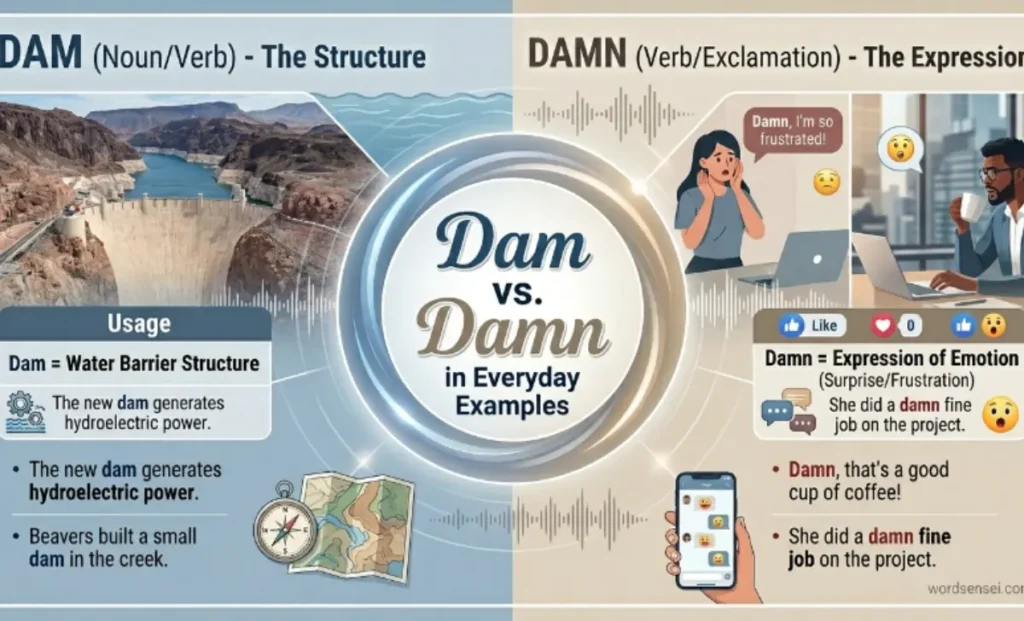
Emails
- The dam project is scheduled for completion next year.
Social Media
- Damn, that movie was amazing!
News Writing
- The dam collapsed due to heavy rainfall.
School Writing
- A dam is built to store water and control rivers.
Business Writing
- The dam construction project increased regional power supply.
Google Trends & Usage Data
Popular Countries
- United States: Engineering + slang usage
- United Kingdom: Grammar and vocabulary learning
- Canada: Education and environmental studies
- Australia: Casual slang + school use
- India: English learning and exams
Why People Search This Keyword
People search “dam or damn” because:
- They sound identical in speech
- Learners confuse spelling and meaning
- Auto-correct errors happen often
- Students need grammar clarification
- Social media increases exposure to slang
Related Grammar Rules
Similar Confusing Words
| Word Pair | Difference |
|---|---|
| then / than | time vs comparison |
| affect / effect | verb vs noun |
| desert / dessert | land vs food |
| dam / damn | structure vs emotion |
Helpful Grammar Tips
- Focus on meaning, not sound
- Learn word categories (technical vs emotional)
- Practice with real sentences
- Avoid guessing spelling in exams
- Use dictionary verification
FAQs
Is “damn” a bad word?
It is a mild swear word, used informally for emotion or emphasis.
What is a dam in simple words?
A dam is a wall built to stop or control water flow.
Can I use damn in formal writing?
No, avoid it in academic or professional writing.
Are dam and damn pronounced the same?
Yes, they sound very similar but have different meanings.
What is an example of dam?
The dam controls river water for electricity.
What is an example of damn?
Damn, I forgot my homework!
Is dam used in science?
Yes, in engineering, geography, and environmental studies.
Why do people confuse dam and damn?
Because they sound almost identical when spoken.
Conclusion
The words “dam” and “damn” may sound similar, but their meanings are completely different. “Dam” refers to a physical structure used to control water, while “damn” is an emotional expression used in informal language.
The confusion happens mainly because of pronunciation and quick typing mistakes. By understanding their meanings, examples, and usage rules, you can easily avoid errors in writing and speaking.
Always use “dam” for engineering or geography and “damn” for casual emotional expression to ensure clear and correct English communication.
Read More Blogs:
- Cognisant vs Cognizant: British vs American English Explained
- Now or Later: Avoid This Common English Usage Mistake

Hi, I am Gerald Nelson, a professional content writer working on wordssensei.com.
I create engaging and SEO-friendly content that informs and inspires readers.