Have you ever written invision when you actually meant envision? If so, you’re not alone. Many English learners, students, professionals, and writers frequently confuse these two terms because they sound similar when spoken aloud.
However, in standard English, only one of these spellings is generally correct when referring to imagining or visualizing something. Understanding the difference between envision and invision is important for effective communication, professional writing, academic work, and everyday conversations.
Using the wrong spelling can make your writing appear less polished and may even confuse readers. Additionally, there is a unique exception involving a well-known technology brand that adds to the confusion.
This guide explains the meanings, origins, correct usage, examples, grammar rules, and practical differences between envision and invision so you can confidently choose the right word every time.
Quick Answer

The correct spelling in standard English is envision.
- Envision means to imagine, visualize, foresee, or picture something in your mind.
- Invision is generally considered a misspelling of envision.
- The exception is InVision, which is a company and brand name.
Correct Examples
- I envision a successful future.
- The architect envisioned the entire project before construction began.
- Leaders must envision long-term growth.
Incorrect Examples
- I invision a successful future. ❌
- She invisioned the outcome. ❌
Quick Rule
If you mean imagine, visualize, or foresee, always use envision.
What Does Envision Mean?
The word envision is a verb that means to mentally picture, imagine, anticipate, or visualize something that is not currently present.
It often refers to future plans, goals, ideas, or possibilities.
Common Meanings
- Imagine
- Visualize
- Foresee
- Anticipate
- Conceptualize
- Picture mentally
- Predict future outcomes
- Dream about possibilities
Example Sentences
- She envisioned herself becoming a doctor.
- The company envisions expanding internationally.
- I can envision a better solution.
- The designer envisioned a modern workspace.
Envision is widely used in business, education, leadership, creativity, and personal development.
What Does Invision Mean?
In standard English grammar, invision is usually considered incorrect.
Most dictionaries do not recognize it as a proper alternative spelling of envision.
Why Do People Write Invision?
Several factors contribute to the mistake:
- Similar pronunciation
- Typing errors
- Lack of familiarity with the correct spelling
- Confusion between prefixes
Important Exception
InVision is a brand name associated with a digital product design and collaboration platform.
In that context, the capitalization matters because it refers to a company rather than the English verb.
The Origin of the Word Envision
Understanding the word’s history helps explain its modern spelling.
Etymology
The word envision combines:
- En- (a prefix meaning “to cause to be” or “within”)
- Vision (the act of seeing or imagining)
Together, they create a word that means to mentally see or imagine something.
Historical Development
Envision became increasingly popular in modern English as business planning, strategic thinking, and personal development concepts expanded.
Today, it is commonly used in professional and motivational language.
Why Is Envision Correct?
The spelling follows established English word formation patterns.
Word Structure
| Part | Meaning |
| En | Within or into |
| Vision | Seeing or imagining |
| Envision | To imagine or visualize |
Because the word originates from vision, the spelling naturally becomes envision, not invision.
British English vs American English
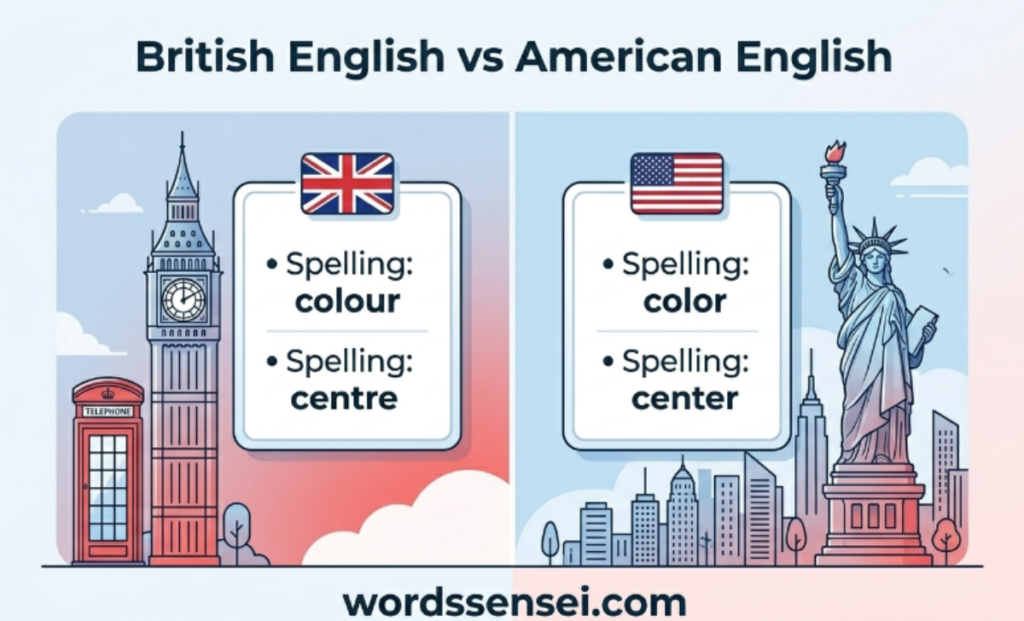
Unlike many spelling debates, both major English variants agree on this word.
Comparison Table
| Feature | Envision | Invision |
| American English | Correct | Incorrect |
| British English | Correct | Incorrect |
| Academic Writing | Correct | Incorrect |
| Business Writing | Correct | Incorrect |
| Professional Communication | Correct | Incorrect |
The spelling remains consistent across English-speaking countries.
Envision vs Invision
Side-by-Side Comparison
| Feature | Envision | Invision |
| Correct English Word | Yes | No |
| Dictionary Recognition | Yes | Usually No |
| Means Imagine or Visualize | Yes | No |
| Professional Usage | Yes | No |
| Academic Usage | Yes | No |
| Brand Name Usage | No | Yes (InVision) |
Quick Summary
Use envision whenever discussing imagination, planning, goals, or future possibilities.
Which Spelling Should You Use?
The answer depends on context.
Business Writing
Use envision.
Example:
- We envision significant growth next year.
Academic Writing
Use envision.
Example:
- Researchers envision future applications of the technology.
Personal Development
Use envision.
Example:
- Envision the life you want to create.
Technology Brand References
Use InVision only when referring to the company or platform.
Common Mistakes with Envision
Many writers make predictable errors.
Frequent Mistakes
- Writing invision instead of envision.
- Assuming both spellings are interchangeable.
- Confusing the word with the company name InVision.
- Misspelling envisioned as invisioned.
Incorrect vs Correct Examples
| Incorrect | Correct |
| I invision success. | I envision success. |
| She invisioned the future. | She envisioned the future. |
| We invision growth. | We envision growth. |
| They invision new opportunities. | They envision new opportunities. |
Envision in Everyday Examples
Workplace
- The CEO envisions a stronger organization.
- Management envisions long-term success.
Education
- Teachers envision improved learning outcomes.
- Students envision successful careers.
Personal Development
- Many people envision their dream lifestyle.
- Athletes envision victory before competitions.
Entrepreneurship
- Entrepreneurs envision innovative solutions.
- Founders envision future market opportunities.
Technology
- Developers envision smarter applications.
- Engineers envision more efficient systems.
Real-Life Applications of Envision
The word appears frequently in professional environments.
Leadership
Effective leaders often envision goals before implementing strategies.
Strategic Planning
Organizations envision future growth before making major investments.
Design and Creativity
Artists and designers envision projects before bringing them to life.
Innovation
Innovators envision solutions to problems that others may overlook.
Synonyms of Envision
Depending on the context, several words can replace envision.
Common Synonyms
- Imagine
- Visualize
- Foresee
- Anticipate
- Picture
- Conceptualize
- Predict
- Dream about
- Project
- Contemplate
Example
- I envision success.
- I visualize success.
Both sentences communicate a similar idea.
Google Trends and Search Behavior
Many users search for “envision or invision” because of spelling uncertainty.
Common Questions
- Is invision a word?
- What does envision mean?
- Why is envision spelled with en?
- Is envision formal English?
- How do I use envision in a sentence?
- Is InVision the same as envision?
Popular Search Regions
- United States
- Canada
- United Kingdom
- Australia
- India
Related Vocabulary
Learning related words improves vocabulary skills.
Similar Words
| Word | Meaning |
| Vision | Ability to see or imagine |
| Visualize | Form a mental image |
| Imagine | Create ideas mentally |
| Anticipate | Expect something |
| Forecast | Predict future outcomes |
| Conceptualize | Form a concept |
These words share similar meanings with envision.
FAQs
Is envision or invision correct?
Envision is correct in standard English.
Is invision a real word?
Generally no. It is usually considered a misspelling.
What does envision mean?
It means to imagine, visualize, or foresee something.
Why do people write invision?
Because the words sound similar when spoken.
Is envision formal English?
Yes. It is widely accepted in professional and academic writing.
What is the difference between envision and InVision?
Envision is a verb. InVision is a company name.
Can I use envision in business writing?
Yes. It is commonly used in leadership and strategic planning.
What is a synonym for envision?
Visualize, imagine, foresee, and anticipate are common alternatives.
Conclusion
The choice between envision and invision is straightforward once you understand the difference. Envision is the correct English verb used to describe imagining, visualizing, anticipating, or mentally picturing future possibilities.
It is widely accepted in academic writing, business communication, leadership discussions, creative projects, and personal development content. Invision, on the other hand, is generally considered a spelling mistake when used as a verb.
The only major exception occurs when referring to InVision, a specific company and brand name. By remembering that envision comes from the word vision, you can easily avoid this common writing error.
Whether you’re planning goals, describing ideas, or discussing future opportunities, using envision will ensure your writing remains professional, accurate, and grammatically correct.
Read More Blogs:
- Deer or Deers? Most People Get It Wrong
- Stopping or Stoping: Which Spelling Is Correct? (Complete Guide)

Gerald Nelson is a contributing writer at Wordssensei.com, covering English grammar, vocabulary, and commonly confused words.