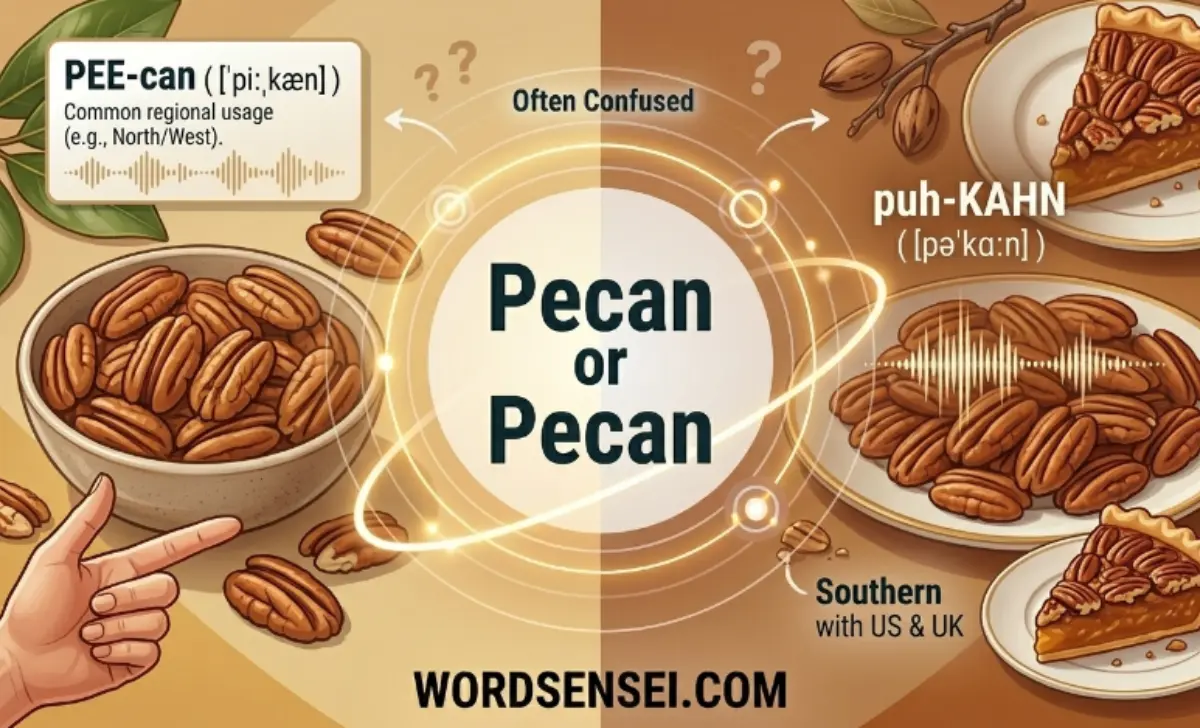
Have you ever heard someone say “pee-can” while another person says “puh-kahn” and wondered which pronunciation is correct? If so, you’re not alone.
The keyword Pecan or Pecan is commonly searched because people want to know the correct way to pronounce this popular tree nut. The confusion exists because different regions of the United States use different pronunciations, and both versions are widely accepted.
Beyond pronunciation, pecans are an important part of American cuisine, Southern food culture, holiday traditions, and nutrition. They are used in famous dishes such as pecan pie, pecan pralines, cookies, cakes, and other baked goods.
This guide explains the pronunciation debate, origin of the word, cultural history, nutrition facts, regional differences, and everyday usage so you can confidently use the word in conversation and writing.
Quick Answer
The short answer is simple:
Both pronunciations of pecan are considered correct.
The two most common pronunciations are:
- Pee-can (/piːˈkæn/)
- Puh-kahn (/pəˈkɑːn/)
Which version people use often depends on:
- Regional dialect
- Family tradition
- Local culture
- Accent differences
No major dictionary considers either pronunciation wrong.
Examples:
- “I bought pecans for a pecan pie.”
- “The pecan tree in our yard produced a large harvest.”
Pronunciation of Pecan or Pecan
The pronunciation debate is one of the most famous examples of regional speech variation in American English.
Common Pronunciations
| Pronunciation | Sounds Like |
|---|---|
| Pee-can | pee-CAN |
| Puh-kahn | puh-KAHN |
| PEE-kan | PEE-kan |
| Pih-kahn | pih-KAHN |
Regional Differences
In many Southern states, speakers often prefer:
Puh-kahn
In some Northern and Midwestern regions, people commonly say:
Pee-can
Spoken Confusion
Because multiple pronunciations exist, hearing a different version does not indicate a mistake. It usually reflects regional accent variation rather than incorrect pronunciation.
Why People Confuse Pecan or Pecan
Several factors contribute to the confusion.
Regional Accents
American English contains many dialects, and pronunciation varies across states.
Family Influence
Most people learn the pronunciation used by parents and grandparents.
No Single Universal Standard
Unlike many words, pecan has multiple accepted pronunciations.
Cultural Identity
The pronunciation often reflects local culture and regional heritage.
Language Evolution
Words naturally change over time, and pronunciation differences develop across communities.
Easy Trick to Remember Pecan or Pecan
A simple memory trick helps:
The Best Rule
Both pronunciations are correct.
Instead of worrying about right or wrong, focus on consistency.
Easy Memory Formula
- Southern style → Puh-kahn
- Northern style → Pee-can
Remember the Meaning
No matter how you pronounce it, the word still refers to the same delicious nut.
The Origin of Pecan or Pecan
The history of pecans is deeply connected to North America.
The word pecan comes from Native American languages and was later adapted through French influence.
Early Indigenous communities harvested pecans long before European settlers arrived.
The pecan tree, scientifically known as Carya illinoinensis, is native to North America and belongs to the hickory family known as Juglandaceae.
Historically, pecans were valued because they:
- Stored well
- Provided energy
- Contained healthy fats
- Supported nutrition during winter months
Today, pecans remain one of America’s most important nut crops.
British English vs American English Spelling
Unlike words such as color and colour, the spelling of pecan remains unchanged.
| Word | British English | American English |
|---|---|---|
| Pecan | Pecan | Pecan |
| Pecan Pie | Pecan Pie | Pecan Pie |
| Pecan Tree | Pecan Tree | Pecan Tree |
Key Point
The debate is about pronunciation, not spelling.
Which Pronunciation Should You Use?
The answer depends on your audience and location.
For Southern Audiences
Many speakers prefer:
Puh-kahn
This pronunciation is common in states such as:
- Texas
- Georgia
- Louisiana
- Mississippi
For Northern Audiences
Many speakers use:
Pee-can
For Global Audiences
Either pronunciation is acceptable because dictionaries recognize multiple forms.
Common Mistakes with Pecan or Pecan
Mistake: Assuming Only One Pronunciation Is Correct
Many people believe their version is the only correct one.
In reality, both are accepted.
Mistake: Confusing Pronunciation with Spelling
The spelling remains the same regardless of pronunciation.
Mistake: Ignoring Regional Dialects
Language naturally changes across communities and regions.
Mistake: Correcting Native Speakers
A pronunciation that sounds unusual may simply reflect another dialect.
Pecan or Pecan in Everyday Examples
In Emails
“We need pecans for the Thanksgiving dessert.”
In News Articles
“Pecan farmers expect a strong harvest this year.”
On Social Media
“How do you pronounce pecan: pee-can or puh-kahn?”
In Formal Writing
The pecan industry plays an important role in agricultural production throughout the Southern United States.
In Everyday Conversation
“Would you like pecans in your cookies?”
Pecan or Pecan – Google Trends & Usage Data
Search interest for this keyword remains strong because of the ongoing pronunciation debate.
Popular search queries include:
- How do you pronounce pecan?
- Pee-can vs puh-kahn
- Pecan meaning
- Pecan pronunciation guide
- Pecan tree facts
- Pecan nutrition
Interest often increases during:
- Thanksgiving
- Christmas
- Holiday baking season
Regions with strong search activity include:
- Texas
- Oklahoma
- Georgia
- Southern United States
- North America
Pecan Pronunciation Comparison Table
| Variation | Pronunciation | Common Region |
|---|---|---|
| Pee-can | /piːˈkæn/ | Northern US |
| Puh-kahn | /pəˈkɑːn/ | Southern US |
| PEE-kan | /ˈpiːkən/ | Some Midwest areas |
| Pih-kahn | Regional variation | Various regions |
Pecan Nutrition and Health Benefits
Pecans are more than just a popular ingredient.
They contain:
- Healthy fats
- Protein
- Dietary fiber
- Antioxidants
- Magnesium
- Zinc
- Potassium
- Vitamins
Potential benefits include:
- Heart health support
- Energy production
- Plant-based nutrition
- Balanced diet contribution
Because of their nutritional value, pecans are frequently included in healthy snack foods and recipes.
Culinary Uses of Pecans
Pecans are widely used in:
Desserts
- Pecan pie
- Pecan cake
- Pecan cookies
- Pastries
Candy
- Pecan pralines
- Candied pecans
Snacks
- Roasted pecans
- Shelled pecans
- Chopped pecans
Holiday Baking
Pecans are especially popular during:
- Thanksgiving
- Christmas
- Family celebrations
Southern cuisine relies heavily on pecans in traditional recipes and food heritage.
FAQs About Pecan or Pecan
What is the correct pronunciation of pecan?
Both “pee-can” and “puh-kahn” are considered correct.
Why do people pronounce pecan differently?
Regional dialects and family traditions influence pronunciation.
Is one pronunciation more common?
Popularity varies by region, especially between Northern and Southern states.
What is a pecan?
A pecan is an edible tree nut produced by the pecan tree.
Where do pecans grow?
They grow primarily in North America, especially the Southern United States.
Are pecans healthy?
Yes. They contain healthy fats, fiber, antioxidants, and important minerals.
What is the scientific name of the pecan tree?
The scientific name is Carya illinoinensis.
Conclusion
The debate over Pecan or Pecan continues because language, culture, and regional accents all influence pronunciation. Whether you say “pee-can” or “puh-kahn,” both versions are widely accepted and understood.
The word refers to the nutritious tree nut produced by the pecan tree, a species native to North America and deeply connected to Southern cuisine, holiday traditions, and American agriculture.
From pecan pie and pralines to healthy snacks and baked goods, pecans remain an important part of food culture. Understanding the word’s pronunciation, history, nutrition, and regional variations helps you use it confidently in conversation, writing, and everyday life.
Read More Blogs:

Hi, I am Anne Seaton. I am a writer and educator working with Wordssensei.com to help students learn English easily.