“The investigators honed in on the suspect.” You’ve probably read that sentence a dozen times — in newspapers, novels, even official reports. It sounds perfectly fine. And yet if you look it up, a style-conscious editor will cross out honed and write homed in the margin. This is one of those quiet usage battles where the “wrong” version is everywhere. Here’s what the dictionary actually says.
Home In vs Hone In: The Short Answer
The recommended phrase is home in, not hone in. Merriam-Webster’s usage guidance is explicit: “‘Hone in’ is commonly used to mean ‘to move toward or focus attention on an objective,’ but the use is often regarded as an error. The original and recommended phrase is home in.” So careful writers write “the missile homed in on the target” — and “the committee homed in on the real problem.” The twist: the dictionary also lists hone in as an informal entry, so it exists in the language. It just isn’t the safe choice in serious writing.
What “Home In” Actually Means
Home as a verb carries the sense of returning or moving toward a target. Merriam-Webster gives two relevant definitions: “to move to or toward an objective by following a signal or landmark,” and “to proceed or direct attention toward an objective.”
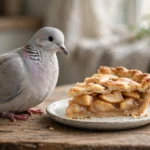
Think of the homing pigeon — a bird famous for finding its way back to its loft from hundreds of miles away. That image is the phrase’s engine. “Homing in” originally described missiles, radar, and radio signals locking onto a destination, and the metaphor extended naturally to attention and focus:
- “Detectives homed in on the witness’s timeline.”
- “Her questions homed in on the budget shortfall.”
- “The sonar operator homed in on the contact.”
In each case the sense is navigation toward a point — the way a pigeon navigates home.
What “Hone” Means — and Why “Hone In” Doesn’t Quite Work
Hone is a perfectly good verb on its own; it just means something different. Merriam-Webster defines hone as “to sharpen or smooth with a whetstone” and, by extension, “to make more acute, intense, or effective.”
So “she honed her argument” is flawless — she sharpened it. But “she honed in on the argument” mixes two metaphors: the whetstone and the homing pigeon. You can hone a skill, hone a technique, hone your instincts. You home in on a target. Keeping the two images separate is the whole trick: sharpening is hone; navigating is home.
Why Is “Hone In” So Common?
Because it’s a textbook eggcorn — a mishearing that makes a kind of sense. Home in and hone in are pronounced identically, and once the pigeon metaphor faded from everyday life, people reached for a word they knew. Hone feels plausible: focusing on something is a little like sharpening attention toward it. The logic is attractive, which is exactly why the error has survived.
It has also been reinforced by repetition. Merriam-Webster is frank about this: hone in is “commonly used,” and its entry in the dictionary reflects that reality rather than endorsing it. If you’ve seen it in print, you’re not imagining things — major publications have used it. Widespread use doesn’t make it recommended, but it does explain why your ear doesn’t flag it.
How to Use Each Phrase Correctly
The rule is simple once you separate the two pictures:
Home in = move toward or focus on an objective (the pigeon). Always followed by on (or in on in some styles):
- “The drone homed in on the signal.”
- “Let’s home in on the three items that matter.”
Hone = sharpen or refine (the whetstone). No preposition needed:
- “He spent a year honing his public-speaking skills.”
- “The debate honed her ability to think under pressure.”
If you’re ever unsure, try swapping in “zero in,” another phrase Merriam-Webster recommends for the same meaning: “the radar homed in on the aircraft” becomes “the radar zeroed in on the aircraft.” If the sentence still works, you needed home, not hone.
Home In vs. Zero In
Merriam-Webster’s usage note offers zero in as an equally safe alternative, and it’s worth knowing the difference. Zero in (from adjusting a gun’s sights to zero) emphasizes precision — narrowing something down to an exact point. Home in emphasizes movement toward the point. In practice they’re interchangeable in most sentences, and either one is safer than hone in when the stakes are high: a job application, an exam essay, a published article. Like toe the line, this is one of those usage pairs where knowing the story behind the phrase settles the spelling.
Frequently Asked Questions
It’s extremely common, but style guides and Merriam-Webster’s usage note still treat it as an error in careful writing. The recommended phrase is home in on. Merriam-Webster does list hone in as an informal entry — acknowledging how widespread it is — but advises “careful writers” to use home in or zero in instead.
It means to move toward or focus attention on an objective. The image is the homing pigeon finding its way back: a missile homes in on a target, a detective homes in on a clue, a question homes in on the point. The preposition on marks the destination.
Almost no one will correct you aloud — it sounds identical to home in, so the distinction lives on paper. In conversation, pronunciation hides the error entirely. The problem only appears when you write it down, which is why this confusion survives: people learn the phrase by ear.
Hone means to sharpen or refine — you hone a skill, a blade, an argument. Home as a verb means to move toward a destination — you home in on a target, a signal, a problem. One is the whetstone; the other is the pigeon. Remembering the two images keeps them apart.
Neither is better; both are recommended alternatives to hone in. Zero in comes from adjusting sights to zero and emphasizes pinpoint precision; home in emphasizes navigation toward the objective. Use whichever fits the sentence — they’re both safe.
An eggcorn is a mishearing of a word or phrase that still makes a kind of sense — like “hone in” for “home in,” or confusing <a href=”https://wordssensei.com/peak-vs-peek-vs-pique/”>peak, peek, and pique</a>. The new version sounds right and seems logical (focusing attention feels like sharpening it), which is why it spreads. Recognizing the original image — the homing pigeon — is the cure.