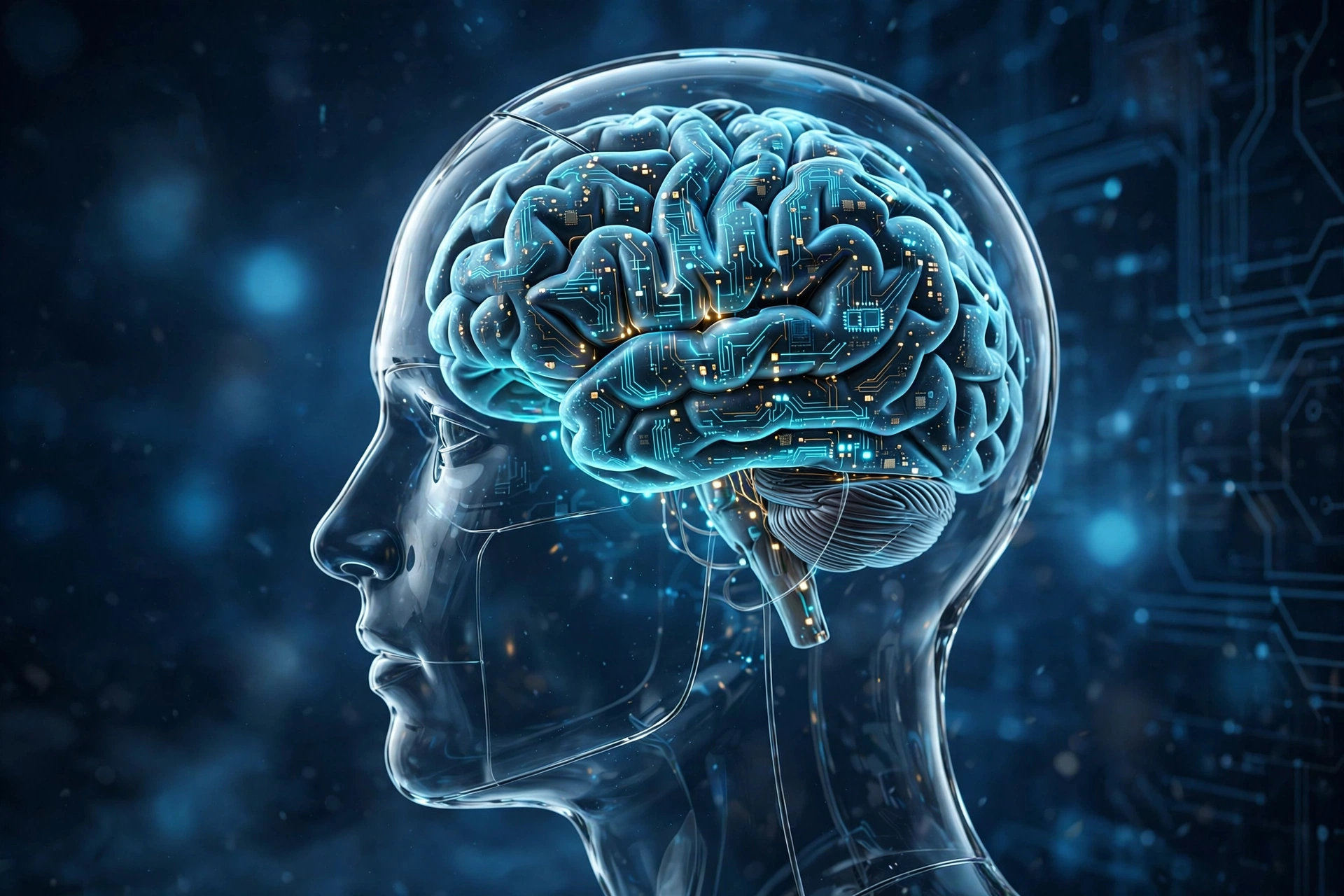
AGI: The Short Answer
AGI stands for “artificial general intelligence”: the potential capability of computer systems or algorithms to match or exceed human cognitive abilities, such as reasoning and learning. Merriam-Webster added AGI to its dictionary in September 2026 as part of a 1,400-word update. It refers to a hypothetical AI that can learn, reason, and apply knowledge across many domains — unlike today’s AI, which is built for specific tasks.
The Dictionary Definition of AGI
Merriam-Webster defines AGI in two senses:
- The potential capability of computer systems or algorithms to match or exceed human cognitive abilities (such as reasoning and learning).
- An artificial intelligence system having this capability.
A related entry for the full phrase “artificial general intelligence” calls it “a hypothetical stage of AI where it will match or surpass humans’ abilities across a range of tasks.” The key word in every definition is “hypothetical” or “potential” — AGI does not exist yet. It is a goal, not a product.
Note that AGI has a second, unrelated meaning in American tax vocabulary: “adjusted gross income” — an individual’s total income minus certain legal deductions. In tech conversations, though, AGI almost always means artificial general intelligence.
Where Does the Term Come From?
Both “artificial general intelligence” and the abbreviation “AGI” date back at least to the early 2000s, according to Merriam-Webster. The term gained traction as researchers needed a name for the long-term aim of AI work: a system that does not just do one job well, but handles the full range of intellectual tasks a human can.
AGI became one of the most talked-about terms of the 2020s as generative AI improved rapidly. Company leaders at OpenAI, Google DeepMind, and Anthropic have all publicly described AGI as their ultimate aim, which pushed the acronym from research papers into everyday headlines.
AGI vs. Narrow AI: The Key Difference
Everything in use today is “narrow AI” (also called “weak AI”): systems designed for specific jobs.
- A spam filter flags spam. It cannot write a poem.
- A translation app translates. It cannot play chess well.
- A chatbot answers questions. It cannot learn to cook by watching a video.
AGI would be the opposite: a single system with the flexibility to learn a foreign language, then use it to negotiate a business contract — transferring skills between domains the way people do. That flexibility, not raw computing power, is the heart of the concept.
This is also where AGI connects to terms like vibe coding, where everyday language directs AI tools — today’s AI follows instructions within its training, while AGI would reason about instructions the way a person does. And as AI-generated faces and voices get more convincing, conversations about AGI increasingly overlap with the uncanny valley — the unease we feel toward almost-human artificial things.
How AGI Is Used in Conversation
AGI works as both an abbreviation and a noun. Some publications style it with periods as “A.G.I.” Examples of real usage:
- “Google DeepMind argues that world models are a key step to achieving AGI, a hypothetical level of AI where a system can carry out most tasks on a par with humans.” (The Guardian)
- “Their companies are pursuing artificial general intelligence, or A.G.I., shorthand for a machine that can match the powers of the human brain.” (The New York Times)
You will also see “AGI” used loosely to mean “very advanced AI.” Strictly speaking, though, the dictionary definition keeps it hypothetical — anyone claiming a current product “is AGI” is using the term more loosely than the dictionary does.
Why AGI Was Added to the Dictionary
Merriam-Webster’s September 2026 update added 1,400 words shaped by AI and internet culture, including “compute” (noun form), “vibe coding,” “parasocial,” “copium,” and “uncanny valley.” The publisher only adds words with evidence of sustained, widespread use across publications — a sign that AGI has moved from a specialist term to mainstream vocabulary.
The addition reflects how central the concept has become to public debate about technology, jobs, and the future — the same debate that produced slang like clanker for robots and AI systems.
Frequently Asked Questions
AGI stands for “artificial general intelligence” — the potential capability of computer systems to match or exceed human cognitive abilities like reasoning and learning.
No. Every dictionary definition describes AGI as hypothetical or potential. Current AI systems are “narrow AI,” built for specific tasks.
AI is the broad field. Today’s AI is narrow: one system, one job. AGI is the hypothetical future stage where a single AI system can learn, reason, and transfer skills across many domains like a human.
Merriam-Webster added “AGI” in September 2026, as part of an update of 1,400 new words, definitions, and meanings.
Yes — in U.S. tax contexts, AGI means “adjusted gross income.” In technology discussions, it almost always means artificial general intelligence.
No. AGI matches human-level cognitive ability; superintelligence would exceed it by a wide margin. AGI is often described as the step before superintelligence.