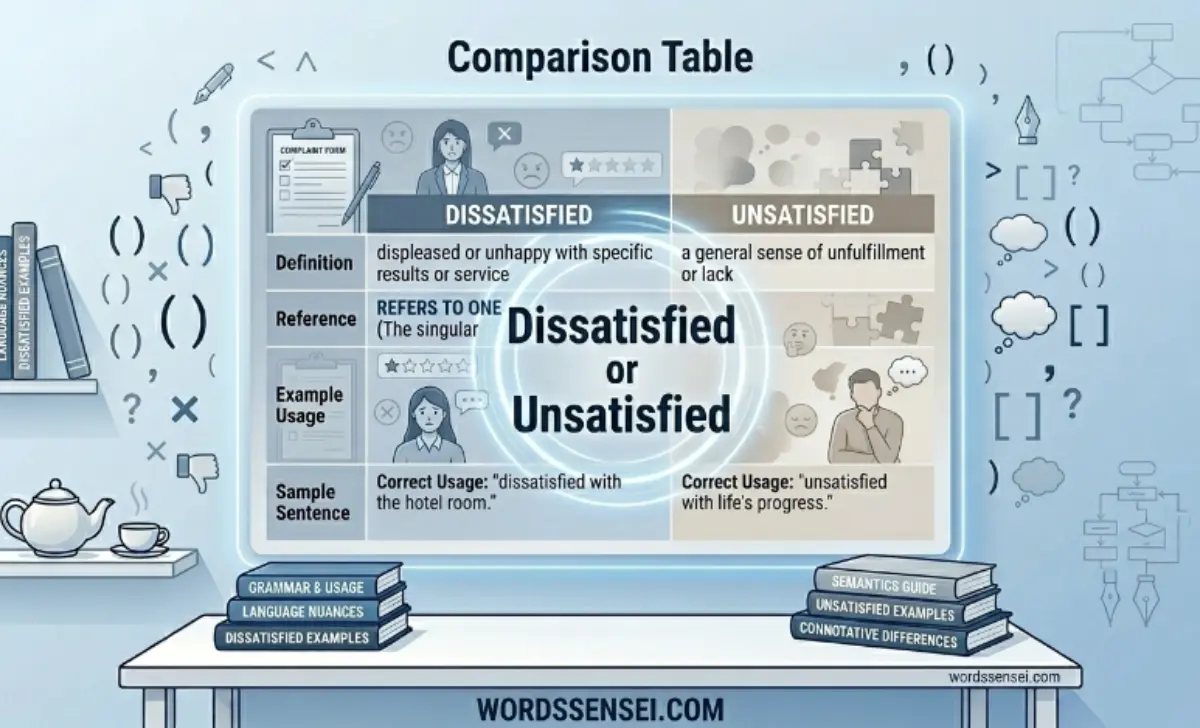
Many English learners, writers, business professionals, and students often get confused between dissatisfied and unsatisfied. Both words seem similar and are often used as synonyms, but they are not always interchangeable.
The confusion usually appears in customer service, academic writing, emotional expression, and everyday communication where people try to describe a lack of satisfaction.
Understanding the difference between these two words improves vocabulary accuracy, grammar skills, and professional communication. In simple terms, dissatisfied is commonly used when expectations are not met, especially in services or experiences, while unsatisfied often refers to unmet needs, desires, or conditions.
This guide explains meanings, pronunciation, grammar usage, emotional context, business applications, common mistakes, and real-life examples to help you use both words correctly and confidently.
Quick Answer
The short answer is:
Both words are correct, but they are used in different contexts.
Dissatisfied
Used when expectations are not met, especially in services or experiences.
Examples:
- The customer was dissatisfied with the service.
- She felt dissatisfied with the product quality.
Unsatisfied
Used when needs, desires, or conditions are not fulfilled.
Examples:
- He felt unsatisfied after the meal.
- Her curiosity remained unsatisfied.
Quick Rule
- Dissatisfied = Expectation not met
- Unsatisfied = Need or desire not fulfilled
Pronunciation of Dissatisfied or Unsatisfied
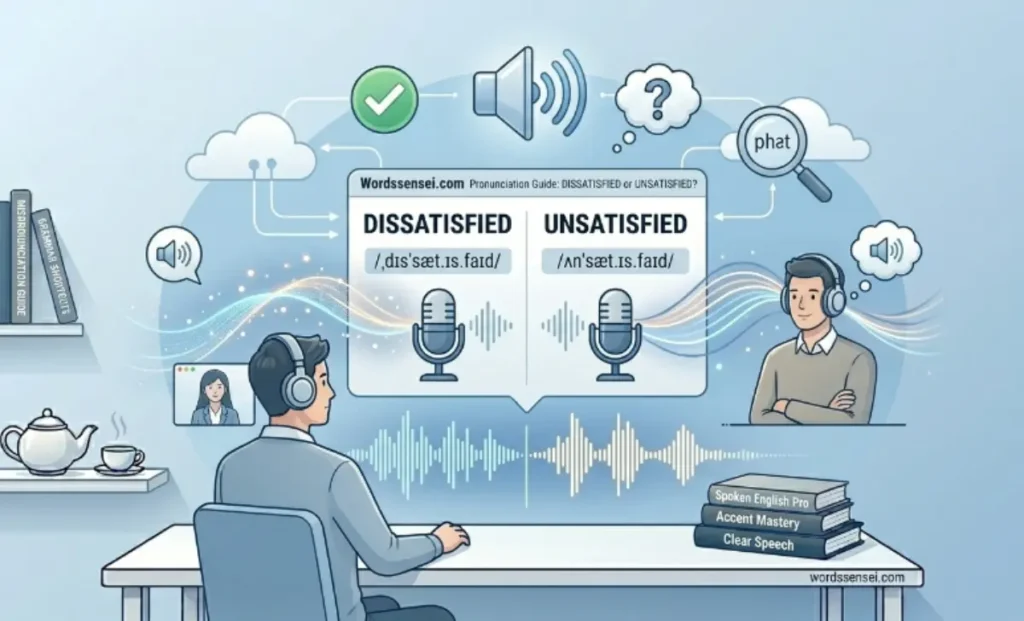
Dissatisfied
Pronunciation:
/dɪsˈsætɪsfaɪd/
Sounds like:
dis-SAT-is-fide
Unsatisfied
Pronunciation:
/ʌnˈsætɪsfaɪd/
Sounds like:
un-SAT-is-fide
Spoken Confusion
Both words sound similar in rhythm, but the prefixes “dis-” and “un-” change the meaning completely.
Why People Confuse Dissatisfied or Unsatisfied
Several reasons lead to confusion:
Similar Meaning
Both words relate to lack of satisfaction.
Overlapping Usage
In many cases, both can be used without changing the sentence meaning significantly.
ESL Learning Challenges
Learners often treat them as perfect synonyms.
Emotional Context Overlap
Both express negative emotional states.
Business Communication
Customer feedback often uses both terms interchangeably, increasing confusion.
Easy Trick to Remember Dissatisfied or Unsatisfied
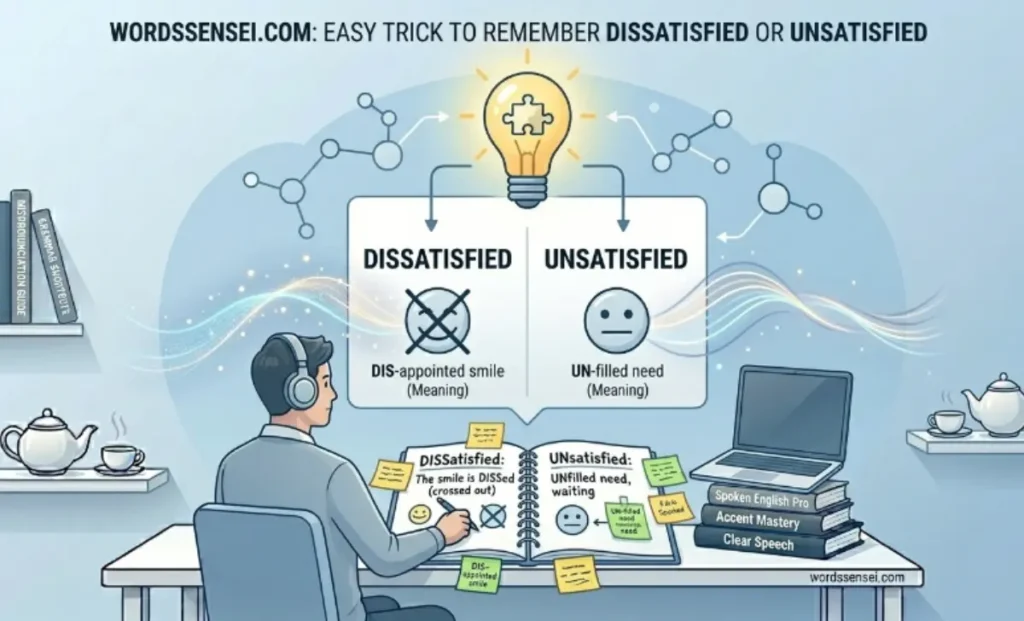
A simple memory trick helps:
Dissatisfied
Think:
Dis = Dislike service
Used for customer service, products, and experiences.
Unsatisfied
Think:
Un = Unfulfilled needs
Used for desires, hunger, curiosity, or emotional needs.
Memory Formula
- Dis = disappointment
- Un = unfinished need
The Origin of Dissatisfied or Unsatisfied
Both words come from Latin roots:
Dissatisfied
Formed from:
- Dis (not)
- Satisfied (fulfilled or pleased)
Meaning:
Not pleased with an experience or result.
Unsatisfied
Formed from:
- Un (not)
- Satisfied (fulfilled or completed)
Meaning:
Not fulfilled in a general or emotional sense.
Over time, both words became part of standard English vocabulary used in psychology, business communication, and everyday language.
British English vs American English Usage
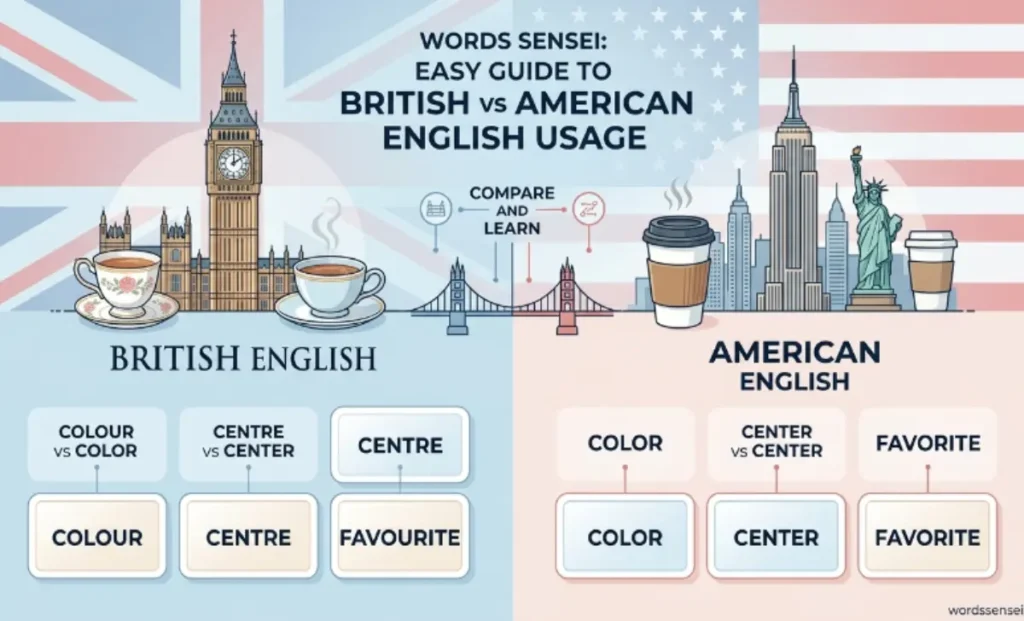
There is no spelling difference between British and American English.
| Word | British English | American English |
|---|---|---|
| Dissatisfied | Dissatisfied | Dissatisfied |
| Unsatisfied | Unsatisfied | Unsatisfied |
Key Point
The difference is based on meaning and context, not region.
Which Word Should You Use?
Use Dissatisfied When:
- Talking about customer service
- Describing product experience
- Writing business feedback
- Reporting complaints
- Evaluating services
Examples:
- The customer was dissatisfied with the hotel service.
- Many users were dissatisfied with the app update.
Use Unsatisfied When:
- Talking about hunger or needs
- Expressing emotional longing
- Describing incomplete desire
- Referring to curiosity or ambition
Examples:
- He remained unsatisfied after the explanation.
- Her emotional needs were unsatisfied.
Common Mistakes with Dissatisfied or Unsatisfied
Mistake: Using them interchangeably always
Incorrect:
- I am dissatisfied with my hunger.
Correct:
- I am unsatisfied with my hunger.
Mistake: Wrong business usage
Incorrect:
- Customers were unsatisfied with service.
Correct:
- Customers were dissatisfied with service.
Mistake: Ignoring context
Always ask:
Am I talking about service or a personal need?
Dissatisfied or Unsatisfied in Everyday Examples
Customer Service
- The customer was dissatisfied with the response time.
- Many users were dissatisfied with the product quality.
Emotional Context
- She felt unsatisfied after the conversation.
- He remained unsatisfied with the explanation.
Business Reports
- Customer dissatisfaction is increasing.
- Surveys show unsatisfied needs among users.
Emails
- We regret that you were dissatisfied with our service.
- The client felt unsatisfied with the outcome.
Dissatisfied or Unsatisfied – Google Trends & Usage Data
Search interest remains high due to:
- Business communication needs
- ESL learning
- Customer service training
- Writing improvement
Popular searches include:
- Dissatisfied meaning
- Unsatisfied meaning
- Difference between dissatisfied and unsatisfied
- Customer dissatisfaction definition
- Unsatisfied needs meaning
- English vocabulary guide
High-interest regions:
- United States
- United Kingdom
- India
- Pakistan
- Canada
- Australia
Dissatisfied vs Unsatisfied Comparison Table
| Feature | Dissatisfied | Unsatisfied |
|---|---|---|
| Meaning | Not happy with experience | Needs not fulfilled |
| Context | Business, service | Emotional, personal needs |
| Usage | Customer feedback | Personal feelings |
| Tone | Formal | Emotional |
| Example | Dissatisfied customer | Unsatisfied desire |
| Common Field | Business English | General English |
Related Vocabulary
Dissatisfied
- Complaint
- Discontent
- Frustration
- Negative feedback
- Service issue
Unsatisfied
- Desire
- Need
- Hunger
- Curiosity
- Emotional gap
FAQs About Dissatisfied or Unsatisfied
What is the difference between dissatisfied and unsatisfied?
Dissatisfied relates to service or experience, while unsatisfied relates to needs or desires.
Are dissatisfied and unsatisfied synonyms?
They are close in meaning but not always interchangeable.
Can I use dissatisfied for hunger?
No. Use unsatisfied for hunger or needs.
Which is more common in business?
Dissatisfied is more common in customer service contexts.
Are both words correct?
Yes, both are grammatically correct but context matters.
Conclusion
Understanding the difference between Dissatisfied or Unsatisfied is important for clear communication, professional writing, and accurate emotional expression. While both words describe a lack of satisfaction, their usage depends on context.
Dissatisfied is commonly used in business, customer service, and product feedback when expectations are not met. Unsatisfied is used when needs, desires, or emotional requirements remain incomplete.
By mastering this distinction, learners can improve grammar accuracy, vocabulary usage, and communication skills in both formal and informal settings. Using the right word ensures clarity and professionalism in writing, speaking, and customer interactions.
Read More Blogs:
- Coaches or Coach’s? The Grammar Rule Most People Get Wrong
- Mould or Mold? UK vs US Spelling Explained With Examples

Hi, I am Gerald Nelson, a professional content writer working on wordssensei.com.
I create engaging and SEO-friendly content that informs and inspires readers.