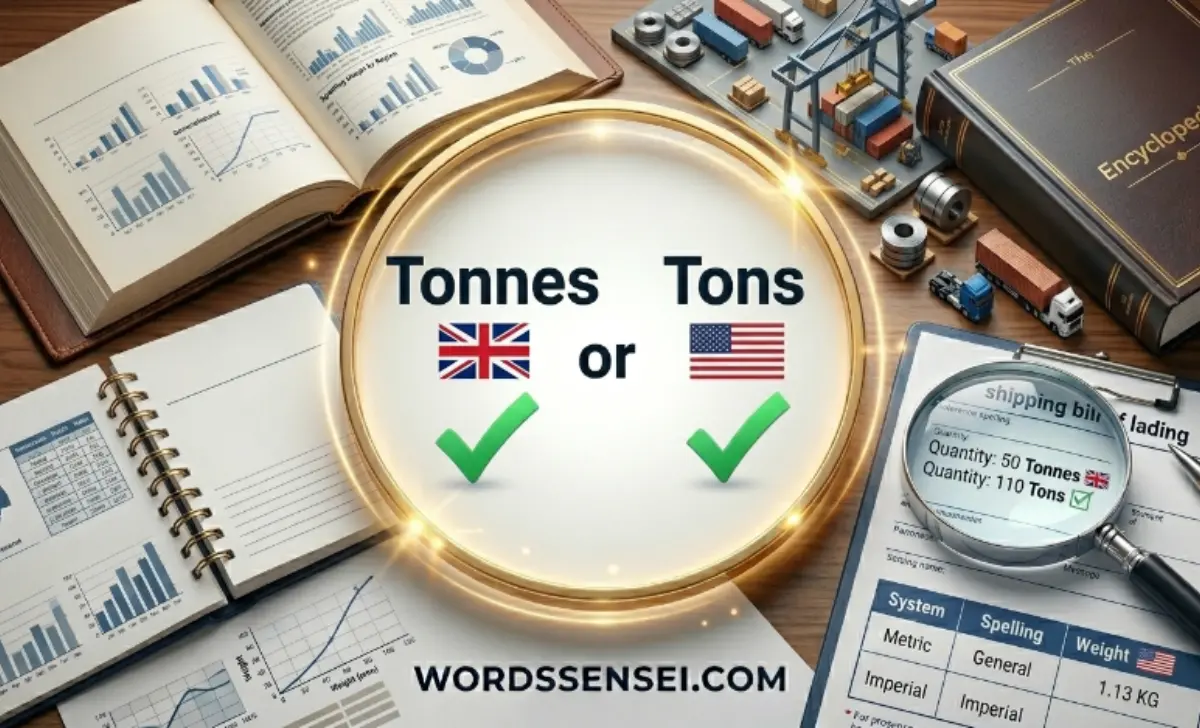
If you’ve ever searched for “tonnes or tons”, you’re not alone. These terms are commonly used in shipping, logistics, construction, mining, agriculture, manufacturing, international trade, and scientific measurements, yet many people are unsure whether they mean the same thing.
While both are units used to measure large amounts of weight or mass, a tonne and a ton are not always equal.
The difference depends on the measurement system being used, whether it’s the metric system, the US customary system, or the imperial system.
Understanding these distinctions is important for businesses, engineers, students, importers, exporters, and anyone dealing with weight calculations.
This guide explains the difference between tonnes and tons, conversion formulas, global usage, industry applications, and common mistakes to help you use the correct unit confidently.
Quick Answer
The correct choice depends on the measurement system.
- A tonne (also called a metric ton) equals 1,000 kilograms.
- A short ton (commonly called a ton in the United States) equals 2,000 pounds.
- A long ton (used in some historical British and maritime applications) equals 2,240 pounds.
Featured Snippet Answer
| Unit | Definition | Common Usage |
|---|---|---|
| tonne | 1,000 kilograms | Metric system and international trade |
| short ton | 2,000 pounds | United States |
| long ton | 2,240 pounds | Some UK and maritime applications |
Quick Fact
A tonne is slightly heavier than a short ton.
What Is a Tonne?
A tonne is a metric unit of mass used throughout most of the world.
Definition
1 tonne equals:
- 1,000 kilograms
- 1,000,000 grams
- 2,204.62 pounds
The tonne is compatible with the International System of Units (SI) and is widely used in scientific, industrial, and international trade settings.
Common Uses of Tonnes
Tonnes are frequently used in:
- International shipping
- Manufacturing
- Agriculture
- Mining
- Engineering
- Commodity markets
- Environmental reporting
Examples
- A cargo shipment weighs 50 tonnes.
- A mining company extracted 10,000 tonnes of ore.
- A wind turbine may weigh hundreds of tonnes.
What Is a Ton?
The term ton can refer to different units depending on location.
Short Ton
The most common American ton is the short ton.
1 short ton equals:
- 2,000 pounds
- Approximately 907.18 kilograms
Long Ton
The long ton originates from the British imperial system.
1 long ton equals:
- 2,240 pounds
- Approximately 1,016 kilograms
Because multiple versions exist, using the word “ton” without clarification can sometimes create confusion.
The Origin of Tonnes and Tons
Understanding the history helps explain why multiple versions exist today.
Historical Development
The term ton evolved from historical measurements used to describe large quantities of goods and cargo.
As international commerce expanded, different regions developed their own standards.
Later, the metric system introduced the tonne, creating a standardized measurement equal to 1,000 kilograms.
Why the Confusion Happens
People often become confused because:
- Ton and tonne sound almost identical.
- Different countries use different systems.
- International trade documents may contain both units.
- Conversion differences seem small but matter in large quantities.
British English vs American English
Regional usage plays an important role.
Comparison Table
| Feature | British English | American English |
|---|---|---|
| tonne | Common | Less common but understood |
| short ton | Rare | Standard |
| long ton | Historical use | Rare |
| metric system | Widely used | Limited use in everyday life |
Today, most international industries prefer the metric tonne.
Tonnes vs Tons: Key Differences
This comparison addresses the main question users want answered.
Unit Comparison Table
| Unit | Kilograms | Pounds |
|---|---|---|
| tonne | 1,000 kg | 2,204.62 lbs |
| short ton | 907.18 kg | 2,000 lbs |
| long ton | 1,016.05 kg | 2,240 lbs |
Quick Summary
- Tonne = Metric system
- Short ton = United States
- Long ton = Historical British usage
Which Unit Should You Use?
The correct choice depends on context and location.
International Trade
Use tonnes.
Most global trade, shipping, and commodity markets use metric measurements.
Scientific and Engineering Work
The metric tonne is generally preferred because it aligns with SI standards.
United States Business
Short tons remain common in certain industries.
Examples include:
- Construction
- Agriculture
- Freight transportation
- Manufacturing
Global Reporting
Tonnes are typically preferred for consistency and international understanding.
Tonnes in Shipping and Logistics
The shipping industry relies heavily on weight measurements.
Common Applications
Tonnes are used to measure:
- Cargo weight
- Container shipments
- Freight loads
- Port operations
- Bulk commodities
Examples
- A cargo vessel may transport 80,000 tonnes of materials.
- International freight contracts often specify weight in tonnes.
Using a globally recognized standard helps avoid costly misunderstandings.
Tonnes in Construction and Manufacturing
Heavy industries frequently use large weight units.
Construction Industry
Examples include:
- Steel production
- Concrete delivery
- Infrastructure projects
- Heavy machinery transport
Manufacturing Industry
Factories may measure:
- Raw materials
- Production output
- Industrial equipment
- Finished goods
Tonnes provide a practical unit for managing large quantities.
Tonnes in Agriculture and Mining
Large-scale operations require precise measurement systems.
Agriculture
Tonnes are commonly used to measure:
- Grain production
- Crop yields
- Fertilizer shipments
- Livestock feed
Mining
Mining companies report:
- Coal production
- Iron ore extraction
- Mineral output
- Commodity reserves
Because these industries operate globally, metric measurements dominate reporting.
Tonnes to Tons Conversion
Understanding conversions helps prevent errors.
Conversion Table
| Conversion | Result |
|---|---|
| 1 tonne to short tons | 1.102 short tons |
| 1 short ton to tonnes | 0.907 tonnes |
| 1 tonne to pounds | 2,204.62 lbs |
| 1 long ton to kilograms | 1,016.05 kg |
Practical Example
If a shipment weighs 100 tonnes:
100 × 1.102 = approximately 110.2 short tons
This difference becomes significant for large shipments and industrial projects.
Common Mistakes with Tonnes and Tons
Many users make avoidable measurement errors.
Frequent Errors
- Assuming a tonne equals a short ton
- Ignoring regional measurement standards
- Using ton without clarification
- Incorrect weight conversions
- Confusing mass and weight terminology
Correct Approach
Always identify:
- Measurement system
- Geographic location
- Industry standard
- Required conversion method
This helps prevent costly mistakes in logistics and trade.
Real-World Examples
International Shipping
A shipping company transports 25,000 tonnes of grain between countries.
Mining Operations
A mine produces millions of tonnes of ore annually.
Steel Manufacturing
Steel plants report production output in tonnes.
Construction Projects
Infrastructure developments often require thousands of tonnes of materials.
Agriculture
Farmers may measure annual crop production in tonnes.
Google Trends & Usage Data
Search interest remains strong because tonnes and tons are widely used across industries.
Popular Countries
This topic is frequently searched in:
- United States
- United Kingdom
- Canada
- Australia
- India
- Germany
Why People Search This Keyword
Users often want to know:
- Is a tonne the same as a ton?
- Which unit is larger?
- How to convert tonnes to tons?
- Which unit is used internationally?
- What is a metric ton?
Related Measurement Terms
Understanding related units improves accuracy.
Common Measurement Comparisons
- kilograms vs pounds
- grams vs ounces
- liters vs gallons
- meters vs feet
- metric units vs imperial units
Helpful Tips
- Use tonnes for international audiences.
- Confirm whether “ton” means short ton or long ton.
- Double-check conversions in trade documents.
- Follow industry standards for reporting.
FAQs
Is a tonne the same as a ton?
No. A tonne equals 1,000 kilograms, while a US short ton equals 2,000 pounds.
Which is heavier, a tonne or a ton?
A tonne is heavier than a US short ton.
What is a metric ton?
A metric ton is another name for a tonne.
How many kilograms are in a tonne?
Exactly 1,000 kilograms.
How many pounds are in a short ton?
Exactly 2,000 pounds.
Which countries use tonnes?
Most countries using the metric system use tonnes.
Which countries commonly use tons?
The United States commonly uses short tons.
How do you convert tonnes to tons?
Multiply tonnes by approximately 1.102 to convert them into US short tons.
Conclusion
Understanding the difference between tonnes or tons is essential for accurate communication in international trade, logistics, engineering, construction, agriculture, manufacturing, and scientific reporting.
A tonne is a metric unit equal to 1,000 kilograms, while a ton may refer to either a short ton or a long ton, depending on the region and industry.
Because the metric tonne is recognized worldwide and aligns with international measurement standards, it has become the preferred choice for global commerce and technical applications.
By knowing which unit applies to your situation and using accurate conversions, you can avoid misunderstandings and ensure precision in both professional and everyday contexts.
Read More Blogs:
- Mould or Mold? UK vs US Spelling Explained With Examples
- Mould or Mold? UK vs US Spelling Explained With Examples

Hi, I am Anne Seaton, a professional content writer working on wordssensei.com.
I create engaging and SEO-friendly articles that inform, inspire, and connect with readers.