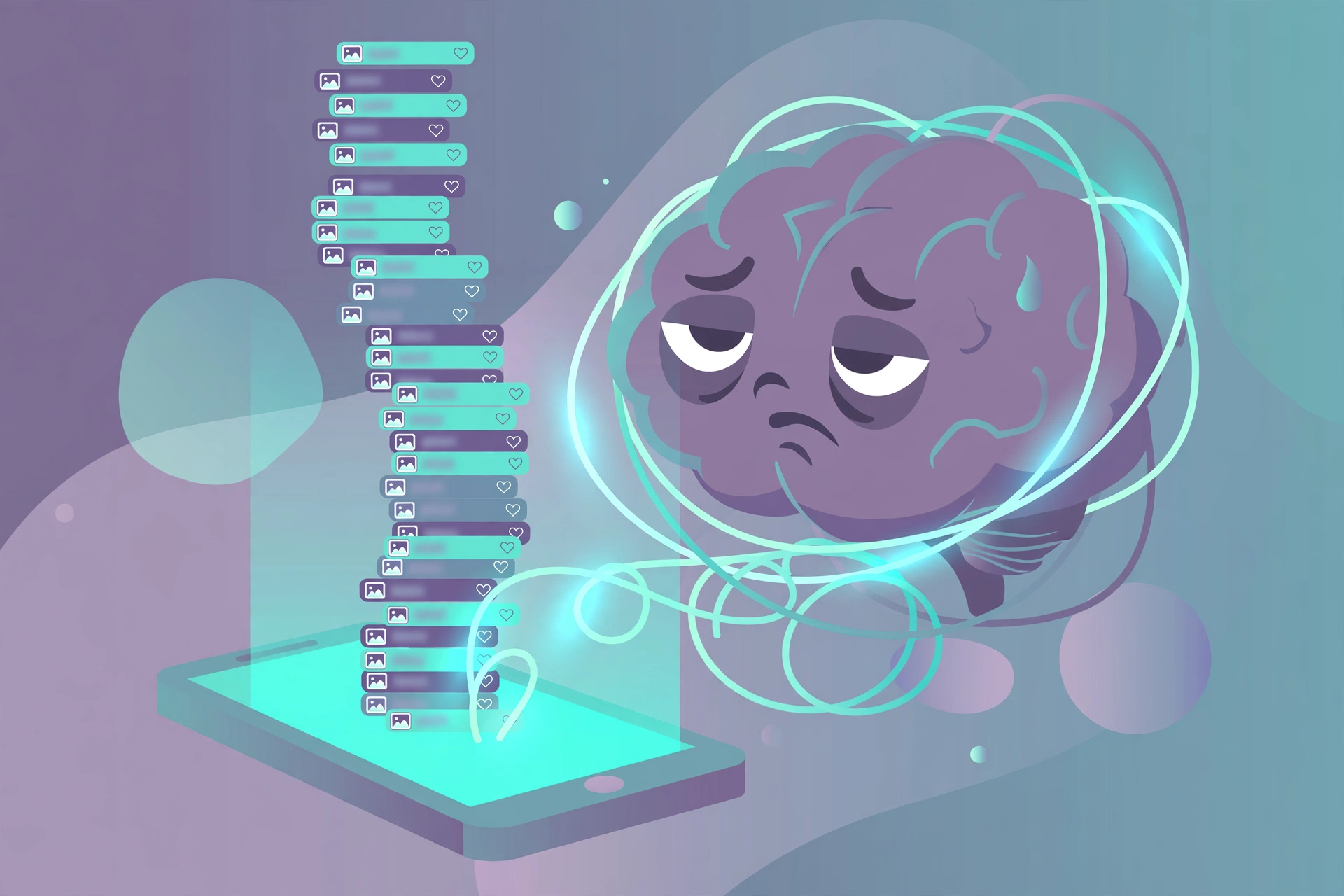
You’ve probably heard someone joke that their feed is “giving them brain rot.” But what does brain rot actually mean — and how did a phrase from an 1854 essay become Oxford’s Word of the Year? Here’s the full story.
Brain Rot: The Short Answer
Brain rot is the supposed deterioration of a person’s mental or intellectual state, especially as a result of overconsuming trivial or unchallenging online content. It also refers to the low-quality content itself — the endless reels, memes, and clickbait that supposedly cause the rot.
What Does “Brain Rot” Mean?
Oxford University Press, which named brain rot its Word of the Year for 2024, defines it two ways. First, as a noun: the assumed decline of someone’s mental sharpness from consuming too much trivial material — now especially online content. Second, as a label for the content itself: videos, memes, and posts “characterized as likely to lead to such deterioration.”
Notice the careful word “supposed.” Brain rot is not a medical diagnosis. It’s cultural shorthand for a feeling millions of people recognize: you open an app for a minute, close it an hour later, and your head feels worse than when you started. The term captures a genuine worry about how we spend our free time in an age of infinite scroll.
In everyday speech, brain rot is used both seriously and jokingly. Someone might say “I need to stop doomscrolling, I’m getting brain rot” after a late-night binge of short videos. Others use it affectionately about their favorite silly memes: “this account is pure brain rot and I love it.”
Where Did “Brain Rot” Come From?
Here’s the twist: brain rot is nearly 200 years old. Its first recorded use was in Henry David Thoreau’s Walden, published in 1854. Thoreau wrote: “While England endeavours to cure the potato rot, will not any endeavour to cure the brain-rot — which prevails so much more widely and fatally?” He was criticizing society’s preference for simple ideas over complex ones — a complaint that sounds remarkably modern.
The term then sat quietly for about 170 years. It was revived as internet slang on TikTok, first among Gen Z and Gen Alpha users who used it to joke about their own feeds. Oxford’s language data recorded a 230% spike in usage between 2023 and 2024. After a public vote of more than 37,000 people, Oxford University Press announced brain rot as its 2024 Word of the Year, beating shortlisted contenders like “demure,” “dynamic pricing,” “lore,” “romantasy,” and “slop.” It followed “rizz” (2023) and “goblin mode” (2022) — all internet-culture winners.
How Do You Use “Brain Rot” in a Sentence?
- “I watched conspiracy TikToks for three hours last night. My brain is completely rotted.”
- “This reality show is pure brain rot, but I can’t look away.”
- “After a week of touch grass instead of scrolling, the brain rot finally lifted.”
- “His entire sense of humor is just brain rot memes at this point.”
- “I told myself I’d read a book, but I chose brain rot instead.”
The phrase works as a noun (“too much brain rot”) and in playful verb-ish constructions (“my brain rotted”). It’s informal — fine for chats, captions, and casual writing, but not for a job application.
Is Brain Rot a Real Medical Condition?
No — and the “supposed” in Oxford’s definition matters. Brain rot is a slang label, not a clinical term. That said, the feeling behind it is real. Researchers have linked heavy short-form video use to worse attention and weaker impulse control, and many people genuinely feel mentally foggy after long scrolling sessions.
Think of brain rot the way you’d think of delulu — a funny, self-aware word for a real modern habit. It names the experience without pretending to be science. If scrolling is genuinely affecting your sleep, mood, or focus, that’s worth taking seriously — but the word itself is just slang doing what slang does best: giving a shared name to a shared feeling.
Brain Rot vs. Doomscrolling: What’s the Difference?
These two often travel together, but they’re not the same. Doomscrolling describes the behavior — compulsively scrolling through bad news or endless feeds. Brain rot describes the perceived result — the mental fog you feel afterward — or the content that causes it. You doomscroll; you get brain rot. One is the act, the other is the aftermath.
Frequently Asked Questions
In slang, brain rot means the mental fog or dulling of your thinking that supposedly comes from consuming too much low-quality online content. It can also refer to the content itself — mindless memes, endless reels, and clickbait.
Oxford University Press named brain rot its 2024 Word of the Year after a public vote of more than 37,000 people. Usage had spiked 230% between 2023 and 2024, driven by Gen Z and Gen Alpha on TikTok, and it captured a widespread cultural anxiety about screen time and attention.
Henry David Thoreau. The first recorded use appears in his 1854 book Walden, where he complained about society favoring simple ideas over complex ones. The modern internet slang meaning developed independently on TikTok in the 2020s.
As a slang term, brain rot isn’t a medical diagnosis. But the behavior it describes — hours of passive, low-effort scrolling — is genuinely linked to worse attention, poorer sleep, and lower mood in research. The word is a joke; the habit behind it is worth watching.
Nothing — brain rot won. The other shortlisted words were “demure,” “dynamic pricing,” “lore,” “romantasy,” and “slop.” Previous winners include rizz (2023) and “goblin mode” (2022).
Slang has an answer for that too: touch grass — log off and go outside. More seriously: set app timers, swap passive scrolling for active hobbies, and notice when the fog rolls in. Your brain will thank you.