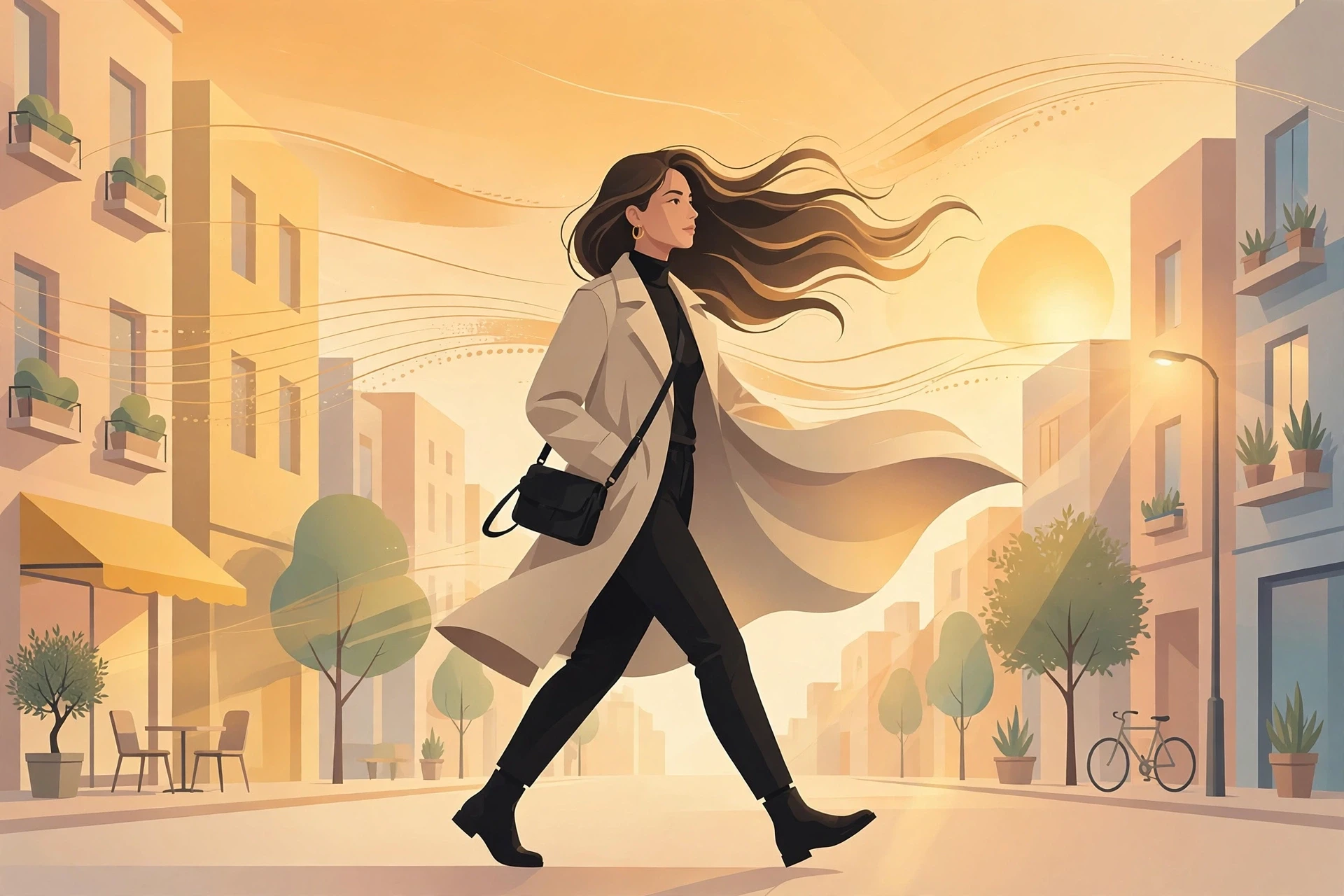
She’s walking through the rain in slow motion, coffee in hand, sad song swelling — living her main character moment. The phrase is everywhere from TikTok captions to everyday conversation. But what does “main character energy” actually mean?
Main Character Energy: The Short Answer
Main character energy means carrying yourself with the confidence and self-possession of a story’s protagonist — romanticizing everyday moments, making bold choices, and treating your life like it has a point of view. It’s about being the star of your own life rather than a background extra in someone else’s.
What Does “Main Character Energy” Mean?
Break it into parts. A main character is the protagonist of a film, show, or book — the person the story follows. Energy, in informal speech, means the overall vibe or spirit someone gives off. Put together, the phrase describes someone who moves through life like the lead in a film: self-assured, intentional, a little cinematic.
In practice it covers a few related ideas:
- Confidence and presence — walking into a room like you belong there.
- Romanticizing the ordinary — turning a coffee run, a sunset, or a rainy commute into a moment.
- Agency — making choices for yourself instead of drifting.
Crucially, the tone is flexible. It can be sincere (“she quit her job to travel — total main character energy”), aspirational (“trying to channel main character energy this year”), or ironic (“me crying in the grocery store: main character energy”). The same phrase praises and teases, depending on delivery. Fans of delulu confidence and rizz charisma will recognize the family resemblance — it’s all part of the same internet vocabulary of self-presentation.
Where Did “Main Character Energy” Come From?
Merriam-Webster carries it as a slang entry and traces the components: the phrase has been used online in an extended sense since at least the late 2010s, describing someone who acts like the center of attention.
It exploded in May 2020, when TikTok creator Ashley Ward posted a video urging viewers to “romanticize your life” and think of themselves as the main character. The formula was instantly repeatable: take an ordinary moment, frame it as meaningful, add a soundtrack, put yourself at the center. Stuck at home during the pandemic, millions of people were ready for exactly that message. The hashtag has since racked up billions of views.
The phrase also has deeper roots. It’s likely influenced by “main character syndrome,” an early-2010s term from role-playing game culture for players who hog the spotlight — and possibly by “big dick energy,” the 2018 slang for swaggering self-confidence. The energy suffix was having a moment; main character energy just became its most durable form.
Compliment or Criticism? Both.
This is what makes the phrase interesting — it lives on a knife’s edge:
The positive reading: self-love, intentional living, refusing to be a passive extra. Therapists and lifestyle writers have embraced it as a mindset: notice your life, own your choices, treat ordinary days as worth filming. In this sense it’s genuinely wholesome advice dressed in meme clothing.
The negative reading: narcissism, attention-seeking, treating real people as supporting cast. That’s main character syndrome — the version where confidence curdles into entitlement. And on X (formerly Twitter), “the main character” means something else entirely: the user whose post goes viral for the wrong reasons on a given day and becomes the target of a massive pile-on. As the saying goes, every day there’s one main character on Twitter, and the goal is never to be it.
Context tells you which one someone means. “She’s got main character energy” at a wedding toast = compliment. “He’s got main character syndrome” about a coworker = complaint.
Main Character Energy vs. Main Character Syndrome
Worth separating clearly, since they’re often confused:
- Main character energy = healthy confidence and self-direction. You star in your own life without diminishing anyone else’s.
- Main character syndrome = the pathological version. You act as if everyone around you is an extra, demanding attention and ignoring others’ needs.
One is a mindset; the other is a criticism. The line between them is other people: energy lifts the room, syndrome drains it.
How to Use It in a Sentence
- “She booked the solo trip to Lisbon — pure main character energy.”
- “Walking to class with headphones in, feeling the main character energy.”
- “He’s got main character syndrome if he thinks the meeting revolves around him.”
- “New year, new me: I’m channeling main character energy.”
- “That sunset deserved its own main character moment.”
Frequently Asked Questions
It means carrying yourself with the confidence, presence, and intentionality of a story’s protagonist — romanticizing everyday moments and making bold, self-directed choices. It can be sincere, aspirational, or ironic.
It spread on TikTok in May 2020 after creator Ashley Ward’s viral “romanticize your life” video, though Merriam-Webster notes online use since the late 2010s. It was likely influenced by “main character syndrome” (early-2010s gaming slang) and “big dick energy” (2018).
Usually. As a mindset it means confidence, self-respect, and intentional living. It only turns negative when it becomes “main character syndrome” — treating others as extras in your story.
Energy is healthy self-assurance that respects others; syndrome is entitlement that centers you at everyone else’s expense. One is praised, the other is criticized.
Something different: the user who goes viral for the wrong reasons on a given day and gets piled on. “Don’t be the main character” means don’t post something that makes you the day’s target.
Yes — Merriam-Webster carries it as a slang entry, with usage examples from TikTok and X and a full explanation of its origins.