What Are the “Sunday Scaries”? The Short Answer
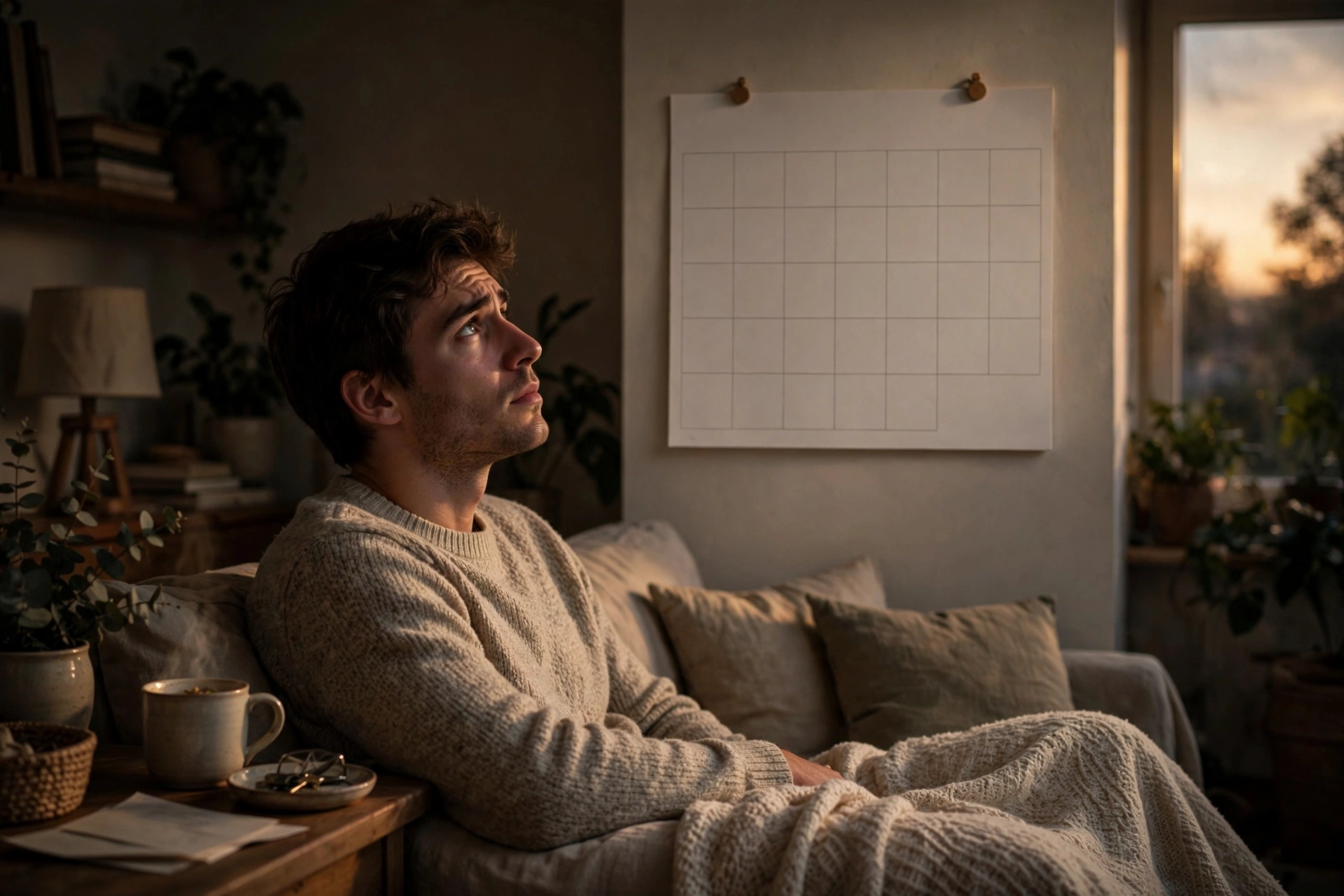
The “Sunday scaries” are the feelings of anxiety or dread that hit on Sunday evening as the weekend ends and the work or school week looms. Your stomach tightens, your mood dips, and Monday feels like it’s already started — even though you still have hours of weekend left.
It’s not a medical term; it’s a cultural phrase for a nearly universal feeling. Merriam-Webster added it in its September 2026 word release, recognizing just how widespread the phrase has become.
Where Did the “Sunday Scaries” Come From?
The phrase started as casual social-media shorthand — “the Sunday scaries” described by office workers, students, and anyone with a Monday morning obligation. Memes did most of the work: Sunday-evening posts about dread went viral year after year, and the phrase stuck because it’s so instantly relatable.
By 2026 it had crossed into mainstream lifestyle coverage — including a HowStuffWorks piece in September 2026 breaking down the phenomenon — and then into the dictionary. The journey is typical of modern phrases: meme first, lifestyle coverage second, dictionary entry third.
How People Use “Sunday Scaries” (Examples)
- The classic: “It’s 6 PM on Sunday and the scaries are kicking in.”
- The coping: “Trying to outrun the Sunday scaries with pizza and a movie.”
- The exaggeration: “My Sunday scaries have Sunday scaries.”
- At work: “Nobody schedule anything heavy for Monday morning — the whole team has the scaries.”
The phrase often functions as a shared joke: naming the feeling makes it lighter.
At work, it doubles as a team-wide excuse: when the whole group admits to the scaries, Monday morning gets scheduled a little lighter and nobody pretends the weekend didn’t end.
“Sunday Scaries” vs Similar Feelings
| Phrase | Meaning | Tone |
|---|---|---|
| Sunday scaries | Dread specifically on Sunday evening | Playful, relatable |
| Case of the Mondays | Gloom carried into Monday itself | Older office slang, milder |
| Burnout | Chronic exhaustion from overwork | Serious, clinical-adjacent |
The Sunday scaries are temporary and cyclical — they fade once the week actually starts. If the dread doesn’t lift, or it starts on Friday, that’s a signal to look deeper, not just a case of the scaries.
Students were among the earliest adopters of the phrase: for anyone with a Monday morning class or deadline, Sunday evening carries the same dread it does for office workers — the mental load of the week ahead doesn’t care whether your Monday starts in a classroom or a cubicle.
Common Mistakes
- Calling ordinary tiredness the “scaries.” The phrase specifically means Sunday-evening anxiety about the upcoming week, not just being tired.
- Treating it as a diagnosis. It’s a cultural phrase, not a medical condition. Real anxiety deserves real support, not a meme label.
- Singular “Sunday scary.” It’s always plural — “the Sunday scaries.”
- Using it on other days. Monday morning dread is a “case of the Mondays.” The scaries belong to Sunday evening.
Related phrases: cuffing season — another seasonal-feelings phrase, this time about autumn romance; and touch grass — logging off and going outside, exactly the kind of enjoyable Sunday-evening plan that helps keep the scaries at bay.
Frequently Asked Questions
The shift from unstructured weekend time to structured obligations — unfinished tasks, early alarms, and the mental load of the week ahead all contribute.
People commonly suggest planning something enjoyable for Sunday evening, prepping for Monday on Friday, and keeping a small Monday-morning win on the calendar. It’s lifestyle advice, not medical treatment.
Yes — Merriam-Webster added it in September 2026.
Absolutely. The phrase applies to anyone with a Monday obligation — school, college, or work.
Very. That’s exactly why the phrase went viral — most people recognize the feeling.