Nonplussed is one of the most misunderstood words in English — and the misunderstanding runs in exactly the wrong direction. If you think it means “calm and unbothered,” you’ve got it backwards. Here’s what it really means.
Nonplussed: The Short Answer
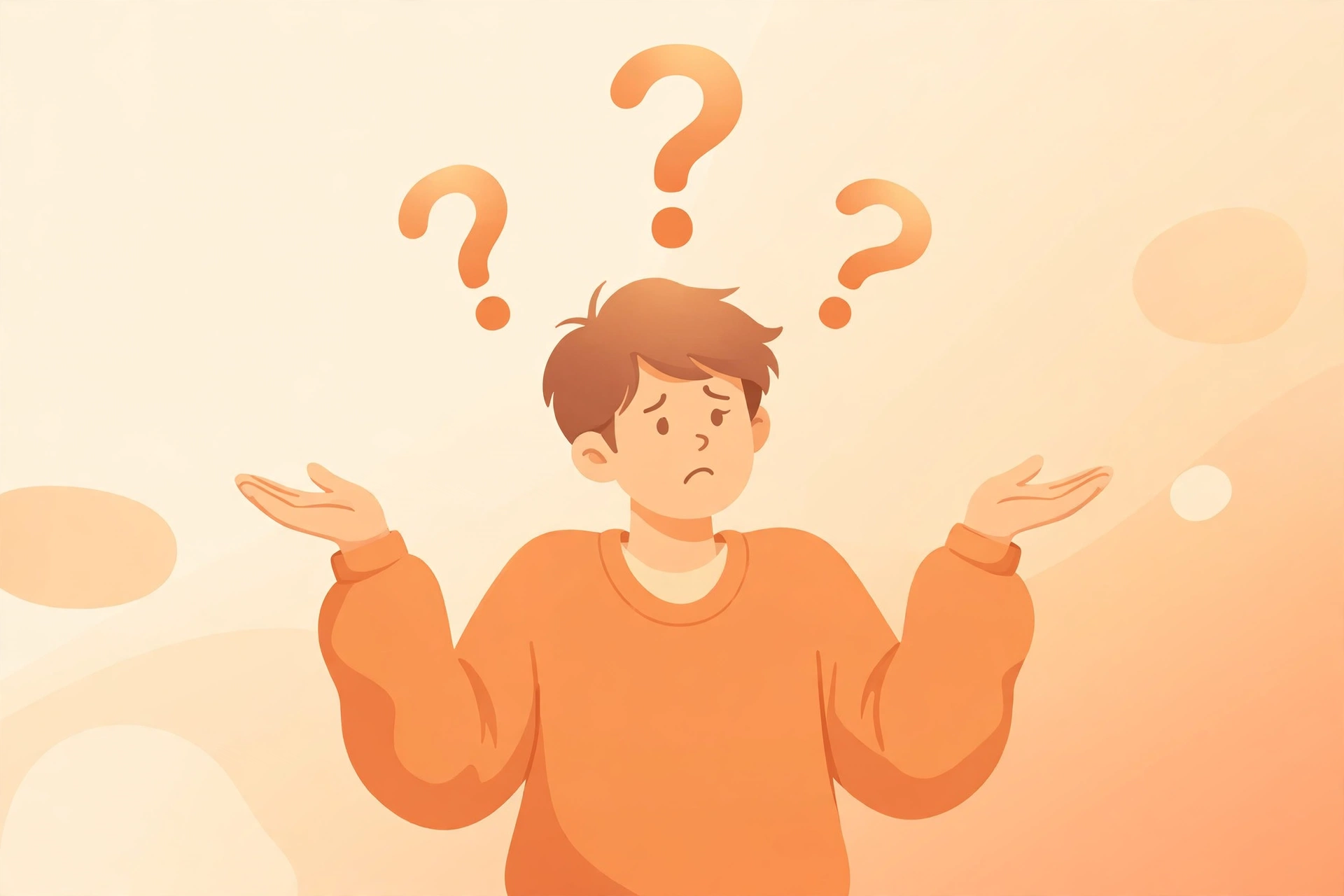
Nonplussed means bewildered, perplexed, or unsure what to say, think, or do. If a surprise announcement leaves you nonplussed, you’re stunned and speechless — not cool and collected.
What Does “Nonplussed” Mean?
Merriam-Webster’s first definition of nonplussed is “unsure about what to say, think, or do: perplexed.” When you’re nonplussed, you’ve hit a mental wall. Someone says something so unexpected that your brain stalls — you’re taken aback, flustered, at a loss.
The confusion comes from the prefix. In words like “nontoxic” or “nonstop,” non- means “not” — so readers naturally assume nonplussed means “not plussed,” i.e., calm and unbothered. But there’s no such word as “plussed” in modern English doing that job. The non here comes from the Latin phrase non plus, meaning “no more” — as in, you can say or do no more. You’ve reached the end of your ability to respond. You’re stuck.
That’s why the correct meaning is the opposite of what it looks like: nonplussed doesn’t mean “not bothered.” It means “so bothered you can’t function.”
Why Do People Get Nonplussed Wrong?
Since the mid-20th century, nonplussed has increasingly been used to mean “unimpressed,” “unfazed,” or “not surprised” — especially in American writing. Merriam-Webster lists this as a second, “chiefly US” sense, but adds a pointed note: the use “apparently arose from confusion over the meaning of nonplussed in ambiguous contexts, and it continues to be widely regarded as an error.”
In other words, so many people guessed the meaning from the prefix that the wrong meaning started showing up in print — even in respected publications. Language purists still consider it a mistake, and using it that way risks confusing careful readers. If you write “she was nonplussed by the criticism,” half your audience will picture her stunned and speechless, and the other half will picture her shrugging it off. That’s the worst outcome for any word.
The safe rule: use nonplussed only to mean bewildered. If you mean “unfazed,” just say “unfazed.”
Where Did “Nonplussed” Come From?
The story starts with the noun nonplus, which entered English in the 16th century meaning a state of bafflement or perplexity — a synonym of “quandary.” Someone brought to a nonplus had reached an impasse in an argument and could say no more. The verb “to nonplus” (to perplex someone) followed, and “nonplussed” is its past participle: literally, “having been brought to a standstill.”
The Latin root non plus (“no more, no further”) is the key. A nonplussed person is someone who has run out of responses — not someone serenely above it all.
How Do You Use “Nonplussed” in a Sentence?
- “The unexpected question left her completely nonplussed.”
- “He stood nonplussed as the crowd burst into applause.”
- “The plot twist nonplussed even longtime fans of the series.”
- “She was nonplussed by the offer — it was far more generous than she’d imagined.”
- “The interviewer’s strange first question nonplussed the candidate.”
Notice each example involves surprise and speechlessness — never calm indifference. Like the difference between disinterested vs uninterested, the distinction here is small but load-bearing.
Nonplussed vs. Unfazed: What’s the Difference?
These are opposites, not synonyms. Nonplussed = bewildered and stuck for words. Unfazed = undisturbed and calm. If breaking news leaves you nonplussed, you’re reeling. If it leaves you unfazed, you barely blinked. Mixing them up says the exact opposite of what you mean — which is why this word lands on so many “words you’re using wrong” lists, alongside waver vs waiver.
Frequently Asked Questions
Nonplussed means bewildered, perplexed, or unsure what to say, think, or do. It comes from the Latin non plus (“no more”) — you’ve reached the point where you can say or do no more.
Not correctly. A growing American usage treats nonplussed as “unfazed” or “unimpressed,” but Merriam-Webster notes this arose from confusion and is still widely regarded as an error. Stick with “bewildered” to avoid being misunderstood.
Because the non- prefix looks like it negates the word (as in “nontoxic”), suggesting “not plussed” = calm. In reality the word comes from Latin non plus (“no more”), describing someone brought to a standstill — the opposite of calm.
From the 16th-century noun nonplus, meaning a state of bafflement or quandary, from Latin non plus (“no more”). Someone at a nonplus had reached an impasse and could say no more.
Both spellings appear, but “nonplussed” (double s) is the standard form in both American and British English. “Nonplused” is a recognized variant but far less common.
Yes. Being nonplussed just means being stunned into speechlessness — the surprise can be pleasant. “The surprise party left her utterly nonplussed” describes happy shock, not distress.