What Does “Larping” Mean in Slang? The Short Answer
In current slang, **calling someone a “larper” means accusing them of faking a whole lifestyle** — performing an identity for the camera that isn’t really theirs. A “gym larper” pretends to be a fitness person; a “tradwife larper” performs a lifestyle they don’t actually live.
It’s an **insult about inauthenticity**: you’re not who you claim to be — you’re just playing a character.
Where Did “Larping” Come From?
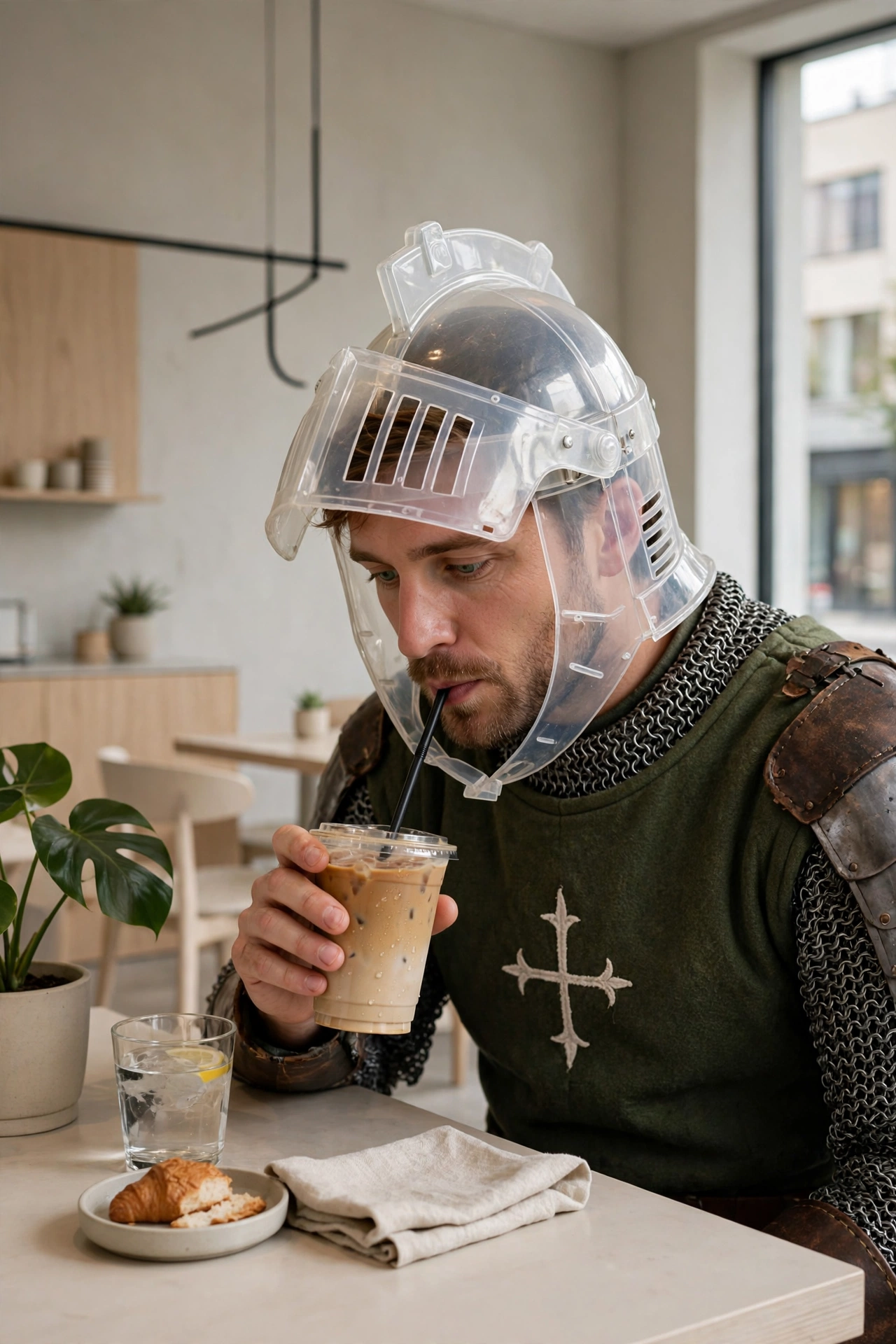
The word starts innocently: **LARP = Live Action Role Play**, a hobby where people dress as knights, wizards, or vampires and act out stories in real life. For decades, “larping” just meant that hobby.
The slang twist came when internet culture **borrowed the concept as a metaphor**. If LARPing is pretending to be a knight for a weekend, then “lifestyle LARPing” is pretending to be a whole *kind of person* online. The insult sense spread through 2026 commentary — covered by outlets including the New York Post and The Everymom in September 2026 — as the go-to accusation for **performative authenticity**: the “that girl” routine, the fake hustle-culture grind, the curated trad lifestyle.
How People Use “Larping” as Slang (Examples)
– Fitness: *”He posts gym selfies but skips leg day and eats pizza nightly — total gym larper.”*
– Lifestyle: *”Her ‘cottagecore farm life’ is larping; she lives in a downtown apartment.”*
– Work culture: *”The 4 AM cold-plunge CEO routine? He’s larping as a billionaire.”*
– Dating: *”His ‘old money aesthetic’ posts are larping — he still lives with his parents.”*
– Travel: *”Her ‘van life’ vlog is larping; the van never leaves the driveway.”*
The pattern is always the same: **public performance vs. private reality**. The accusation is that the gap between the two is the whole point.
“Larping” (Hobby) vs “Larping” (Insult)
| Meaning | What it is | Tone |
|—|—|—|
| **LARPing (hobby)** | Dressing up and role-playing fantasy scenarios | Neutral, fun hobby |
| **Larping (slang insult)** | Faking a lifestyle/identity online | Mocking, accusatory |
Context tells you which one someone means — “weekend LARP group” is the hobby; “stop larping” is the insult.
Common Mistakes
– **Using it as light teasing.** “Larper” hits harder than it sounds — it accuses someone of being fundamentally fake. Don’t aim it at friends over small things.
– **Confusing it with cosplay.** Cosplay is dressing as a character (everyone knows it’s a costume). Slang “larping” is about **pretending the costume is real life**.
– **Applying it to genuine effort.** Someone actually learning and growing isn’t “larping” — the insult is for performance *without* substance. Like the [polyester](https://wordssensei.com/polyester-meaning/) insult, it’s about manufactured image.
Related slang: polyester — the “fake and over-curated” insult, explained. What the sigma — Gen Alpha slang decoded with examples.
Frequently Asked Questions
What does larping mean in slang?
Accusing someone of faking a lifestyle — performing an identity online that isn’t really theirs. “He’s larping as a fitness guy” = he’s pretending.
What does LARP stand for?
Live Action Role Play — a hobby where people dress as characters and act out stories in person.
Is calling someone a “larper” an insult?
In current slang, yes — it means they’re fake or performative. It’s stronger than it sounds, so use it carefully.
What’s the difference between larping and cosplay?
Cosplay is openly dressing as a character; slang “larping” is pretending a fake lifestyle is your real one.
Where did the “fake lifestyle” sense come from?
Internet culture borrowed the role-play concept as a metaphor for performative online identities; it spread widely through 2026 commentary.
Can “larping” be used as a verb?
Yes — “stop larping” is the classic usage. The verb form calls out the performance directly.
Is it “larping” or “LARPing”?
Both appear. Capitalized “LARPing” usually means the hobby; lowercase “larping” usually means the slang insult — though usage varies.